


Paradox strategies have been teaching for years that money is power, but usually it’s about gold in the treasury and interest on loans. And then you open the diplomatic panel and see that your own state bank has led a war of independence against you, and half of Europe has sided with it.
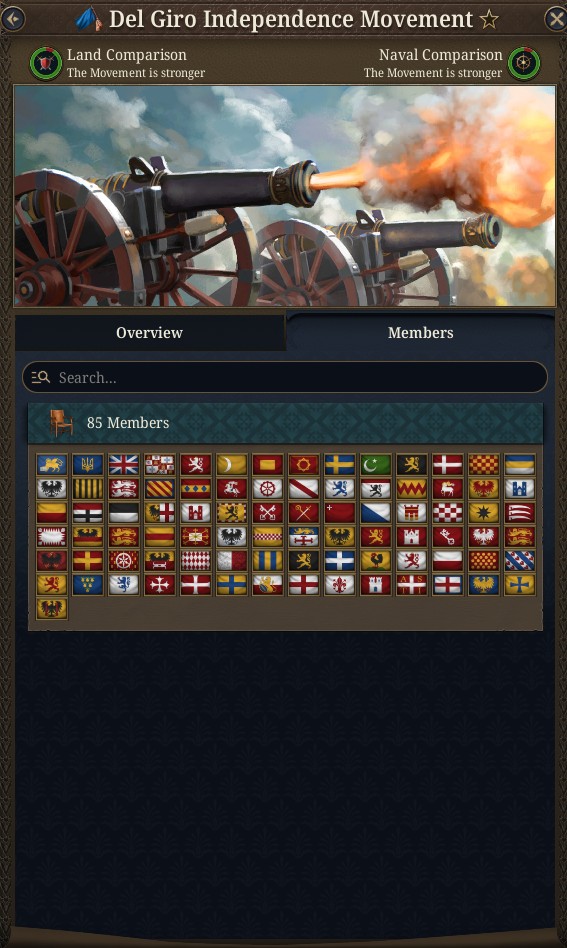
This is exactly the picture that one of the players had in Europa Universalis 5. The controlled bank launched a movement for independence, recruited an impressive list of guarantors and turned an ordinary vassal fuss into a pan-European war. The reaction was short and very clear: “What the hell?”
The point is in the mechanics of the so-called building-based countries, which in the game include banks and trading societies like the Medici and Fuggers. Such entities exist not at the expense of territories, but at the expense of branches and trade missions scattered throughout foreign provinces, and at the same time systematically improve relations with literally everyone. Plus, banks almost always keep a place in the office, and from there it is convenient to sow disloyalty within the overlord.
Then the AI comes into play, which, judging by its behavior, presses any available button, and support for someone else’s independence is at the top of this list. Hence the absurd coalitions, where Catholics, Orthodox and Muslims unite against one player, and Moldavia in 1390 goes to liberate itself from Hungary with the support of France, England and Castile, without having a single common border with its patrons. Experienced players respond to this radically, freeing banks immediately after capture, selling them to some strong power, or achieving instant white peace if the subject’s buildings in your provinces are so large that it is formally considered “occupied.”
At the same time, the banks themselves Europa Universalis 5 remain one of the most interesting ideas in the game. A hundred years of playing for a bank are quite capable of leading a gamer to become the richest power in the world, however, with a side effect in the form of a twenty-second freeze when opening the construction menu, when the game honestly tries to draw a list of eight and a half thousand trading branches. The community expects future additions to develop this line: the processing of trading companies, the struggle between France and England for Canadian furs, Dutch dominance in the spice trade and the capture of India by British capital.
Johan Andersson clearly has more than one patch to make regarding the balance of diplomacy, and the idea of a bank that is stronger than its own state has turned out to be suspiciously plausible.


