


The experimental drug rentosertib, whose molecule was designed by artificial intelligence, showed an unexpected side effect.
In patients taking the drug, the calculated indicators of biological age shifted towards rejuvenation by several years.
The development was carried out by Insilico Medicine, a company specializing in the use of AI in pharmacology. The drug was originally created to treat idiopathic pulmonary fibrosis, a disease in which lung tissue is gradually replaced by scar tissue.
According to Insilicothe algorithms performed two tasks. The AI identified a biological target, the TNIK protein, and then designed an inhibitor molecule capable of blocking its activity.
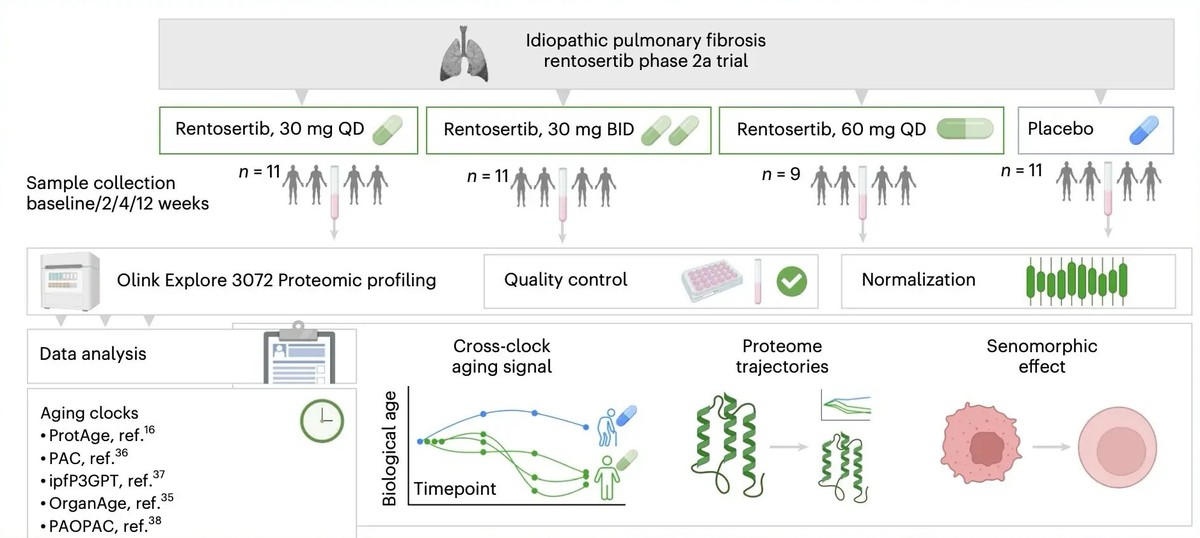
New research published September 7 in Nature Biotechnologypresents a reanalysis of data from a phase 2a clinical trial. It involved 71 patients from China, and the aging analysis involved 42 people with an average age of about 67 years.
Participants’ blood samples were tracked for 12 weeks. The researchers used six so-called aging clocks, computational models that use the composition of proteins in the blood to estimate biological age or mortality risk.
All six models documented a shift toward younger predicted ages in patients treated with the drug. In the placebo group, there were almost no changes or slightly increased rates.
The results varied depending on the dosage and measurement method. At week four, in patients taking 60 mg daily, four chronological age models showed a reduction of approximately 2.7 to 3.5 years.
Two models based on mortality risk did not reveal significant changes. The most stable signal overall was given by the 30 mg twice daily regimen.
Before you plan for an extra century in retirement, there’s a key caveat to consider. The figures given reflect model predictions and not directly measured body conditions.
The researchers themselves admit that they cannot completely separate the effect on the aging process from improving the condition of the lungs. Separate studies will be needed to understand whether the drug helps people without pulmonary fibrosis.
A year earlier, it was reported about the development of blood tests that assess the rate of aging of individual organs. Such tools help identify disease risks, but younger test results have yet to translate into real health benefits.
Insilico has already announced the launch of a phase 3 trial targeting the lung disease. It plans to enroll 320 participants and measure changes in lung function over 52 weeks.
However, Insilico notes that rentosertib remains an investigational drug and has not received regulatory approval. At the same time, the publication appeared against the backdrop of general optimism around the use of AI in life expectancy research.
Futurist Peter Diamandis previously stated that the main key to a long life is to live until the 2030s – and then artificial intelligence will take the baton. Also keeping a close eye on the news about Rentosertib is Brian Johnson, the millionaire whose attempt to cheat aging was the subject of a Netflix documentary and who has long talked about the role of AI-generated drugs in extending human life.


