


Religion in games usually works as decoration: the pantheon is written once, and it hangs unchanged throughout the franchise. The Elder Scrolls universe is more honest in this sense, because here God can be transformed in a couple of centuries from a symbol of occupation into the main banner of national resistance.
If in Oblivion look into the temple of Bruma and talk with the priests, a rather uncomfortable thing for the Empire will turn out. Local Nords refuse to recognize Talos, because for them this is an alien, purely imperial deity from Cyrodiil, and not part of the Nordic pantheon. The logic is straightforward: the Nords fought with Tiber Septim and were defeated by him at Sancre Tor, so there is no desire to deify their own conqueror, even if during his lifetime he may have been one of them.
https://www.reddit.com/r/oblivion/comments/1w84at5/its_funny_that_in_skyrim_the_stormcloaks_worship/
By the events of Skyrim, the picture turns one hundred and eighty degrees. Talos becomes the core of Nordic identity, Heimskr shouts about him throughout Whiterun, and the Stormcloaks rebel largely due to the ban on his cult by the White-Gold Concordat. One of the discussion participants formulated this somersault perfectly:
Nords in Oblivion They still hold on to their faith and quarrel with the Empire over it. The Nords in Skyrim have almost completely accepted the Imperial faith and are again quarreling with the Empire over it.
The in-game explanation is obvious, and it is much more elegant than simply “a lot of time has passed.” Fitting between the games is the Oblivion Crisis, Martin Septim’s sacrifice, and the Avatar of Akatosh, which unfolded over the Imperial City in front of a crowd of witnesses. The descendant of Talos literally turned into a dragon and carried out the Daedric prince, and after the accession of Titus Mede I, the Empire had ideal material for missionary work in Skyrim, because the divinity of the Septim blood ceased to be a fairy tale from a book.
The second engine of conversion, ironically, is the Thalmor. The ban on the worship of Talos turned him from an imperial deity imposed from above into the only thing that the Altmer are trying to take away from the Nords by force, and such things are protected especially fiercely. The real old faith in Skyrim remains as a relic: the hermit Froakie from the quest “The Sacred Trials of Kin” stubbornly calls Kynareth by her Nord name Kin, and he is one of the few NPCs who can be met in Sovngarde if he dies before the finale.
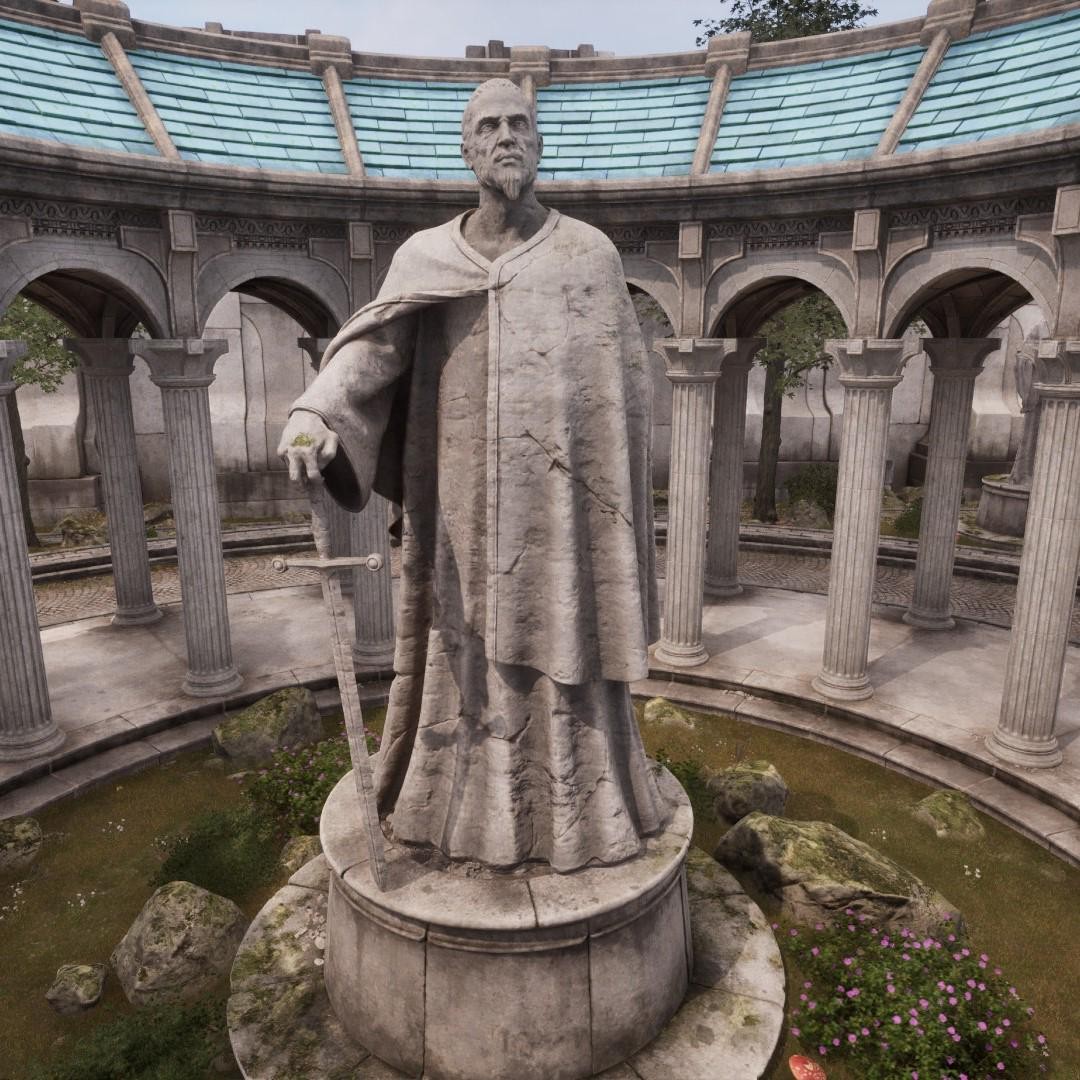
The parallel with real history is not even hidden here: Scandinavian paganism was replaced by Christianity in about the same two or three centuries, and with the same set of tools, from political pressure and dynastic benefits to the careful integration of local gods into the new pantheon. Against this background, the demand of part of the community to return a full-fledged animal pantheon of the Nords to The Elder Scrolls 6 does not look like a whim, but a completely working narrative idea, especially after the civil war and the Thalmor threat.
For two hundred years, Talos has not changed a single line in his own description, but the Nords managed to change their attitude towards him twice.


