


It is still customary to measure open worlds in square kilometers, although in reality you only feel what can be covered on foot.
And as soon as you leave the car in the garage, it turns out that half of the huge maps are a beautiful void between points of interest, and rare exceptions turn an ordinary walk to the nearest ATM into a separate attraction.
This is exactly the conclusion one of the players came to Cyberpunk 2077posing the question bluntly: isn’t Night City the most complex and researchable city in the history of the industry. After five hundred hours and giving up transport, he was still finding new backdoors, and others responded by boasting of six passages and seven hundred hours with the same result.
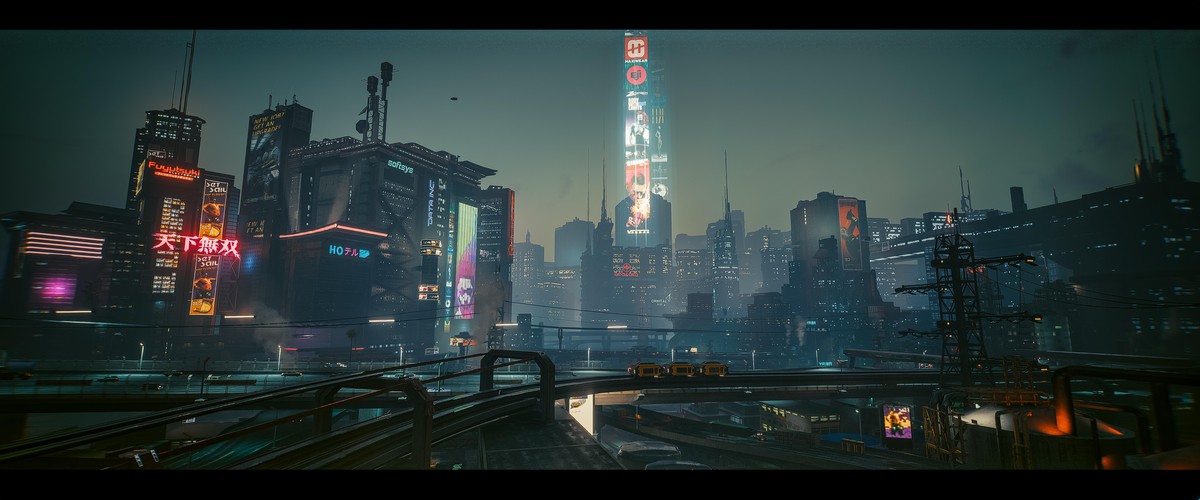
The city’s main trump card is working with the Z axis, which most studios remember only in the form of a staircase. Night City is literally built in layers: overpasses go above neighborhoods, megatowers like H10 and H8 are vertical districts in their own right, and almost every significant order objective has a rooftop exit, a fire escape, or a technical passage above the heads of NPCs.
The Phantom Liberty expansion with Dogtown took the technique to its logical extreme, turning vertical routes into the main method of movement, and the “Strengthened Links” cyber implant with a double jump into a de facto mandatory purchase for those who like to clear the map.
In terms of size, everything is more modest than it seems to the eye: in terms of land area, Night City is approximately comparable to the GTA V map, it’s just that the building density and the number of entrances to buildings there are incomparably higher. A separate theme is the chaotic layout with sharp turns, one-way streets and single-lane exits that look like a pinball machine chute.
According to the lore, this is not a mistake by the designers, but a consequence of the history of the city: Richard Knight conceived a utopia with pedestrian zones and public transport, but after his death the city went through a criminal rampage, corporate takeover and a nuclear explosion in the center, after which it was completed haphazardly and in the interests of corporations.

What happened to China, Russia and Africa in the world of Cyberpunk 2077
The downside to all this geometry is the sense of decoration. Most of the buildings serve as background, NPCs walk in circles without their own daily routine, and order locations are locked immediately after completion, and there’s not much left of the demo’s promises of “vastly improved crowd systems.”
Comparisons include Kuttenberg from Kingdom Come: Deliverance II, where each citizen has a full cycle of the day, Novigrad from The Witcher 3 and the world of Red Dead Redemption 2, which changes right before our eyes while a construction site turns into a finished building.


