


International group of researchers carried out genetic analysis dozens of samples of South American tiger cats and discovered among them a species previously unknown to science.
The new cat was named Leopardus tilcayoor tilkayo.
In total, according to the authors, the region is home to at least five independent species of tiger cats instead of one or two, as was thought ten years ago. Clarification of the classification directly affects environmental measures, since each of these lines will have to be assessed separately.
Lead author of the study Jonas Lescroar, an evolutionary ecologist at the University of Antwerp, said:
Tilkayo is the first living cat species to be discovered and given a new name in over a hundred years.
Despite their name, tiger cats are not related to the tiger. The body length is from 30 to 60 centimeters, the weight is about two to three kilograms, and they belong to the same genus as ocelots (Leopardus). What they have in common with tigers is only a spotted-striped coat pattern, for camouflage in the forest floor. The second common name for these predators is oncilla.
According to Lescroire, tiger cats are cryptic animals – different species are almost indistinguishable from each other in appearance. Therefore, the only reliable way to distinguish between them is gene analysis, and zoologists have acquired this opportunity relatively recently.
The first serious attempt at genetic revision of the group took place in 2013. Then it turned out that the only recognized species Leopardus tigrinus actually splits into at least two: actually L. tigrinus from the northern half of South America and Leopardus guttulus from the south.
In 2024 data appeared that cats along the Andes range form a separate species Leopardus pardinoidesand some experts insisted on the group’s independence Leopardus emiliae.
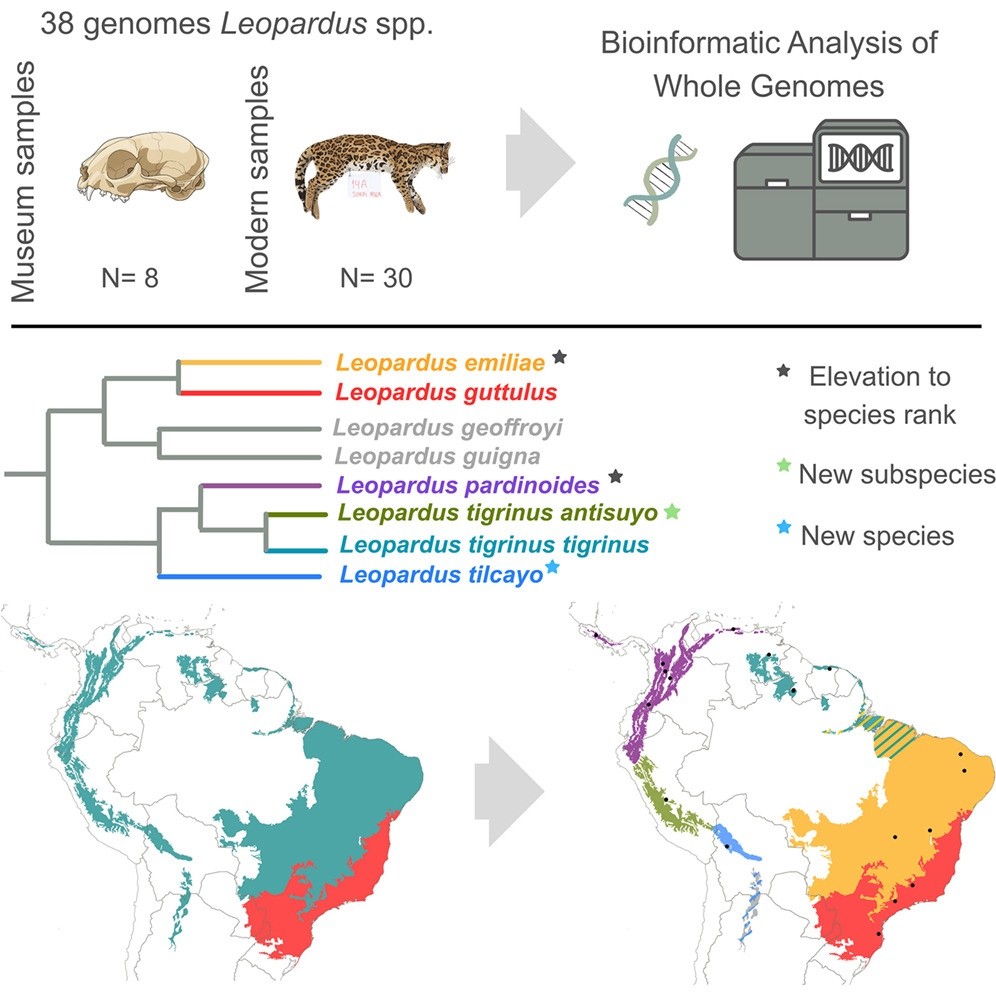
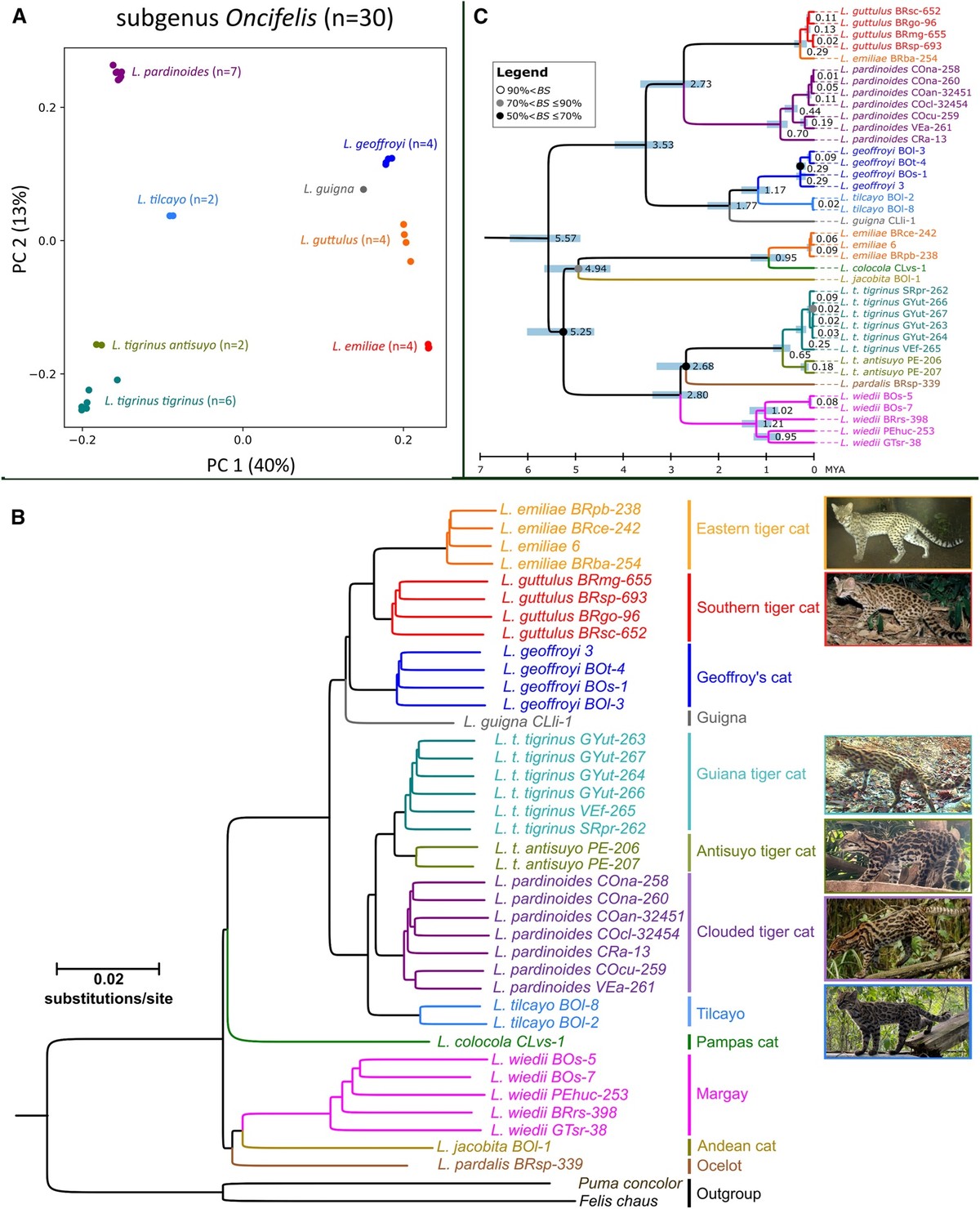
The current work covered a much wider sample from across the continent. Scientists read the complete genomes of 38 cats of the genus Leopardusof which 26 were tiger cats. The sample included specimens from previously unexplored sites in Guiana, a region in northeastern South America that includes Guyana, Suriname and French Guiana, as well as historical specimens from museum collections.
Our study represents the most complete genetic work to date, including that key missing element: DNA from tiger cats from Guiana, the area where the original tiger cat L. tigrinus was described in 1775.
Previously described species of tiger cats already had formal names, and genetics only confirmed their status as separate species, and not subspecies. But in Bolivia, the team unexpectedly stumbled upon a line that did not coincide with any known or controversial group. Name Leopardus tilcayo derived from the local word used by the region’s inhabitants to refer to tiger cats.
Study co-author Paola Nogales Azcarrunz, a National Geographic Society fellow and wild cat conservationist in Bolivia, added:
It is important that our study did not rely only on fresh samples. We also analyzed specimens held in natural history museums, showing how such collections can provide valuable genetic information and help answer questions that would otherwise be difficult or even impossible to study.
In addition to describing Tilkayo, the authors confirmed the independence L. emiliae And L. pardinoides along with L. tigrinus And L. guttulus. In addition, evidence was found of the existence of a previously unknown subspecies, which was named L. tigrinus antisuyo.

Scientists have assembled for the first time a synthetic cell that eats, grows and divides

In Australia, a dolphin has died from bird flu for the first time – 413 cases of wildlife infection in two months
Currently, only two species of tiger cats are listed in the Red Book of the International Union for Conservation of Nature, L. tigrinus And L. guttulusboth with vulnerable status. The remaining lines identified by geneticists may be in an even more dangerous position, since no one has assessed their numbers separately. Researchers are calling for a review of the conservation status of all five species.
We have already shared our results with the IUCN, and in the upcoming reassessment of tiger cats they will look at each unit individually, leading to more accurate assignment of conservation categories.
Co-author Eduardo Eizirik, a researcher at the Pontifical Catholic University of Rio Grande do Sul, also noted:
We plan to study these little-known cats for many years to come. After 25 years of accumulated improvements, we are finally close to fully understanding their evolutionary history and taxonomic structure (some additional regions still need sampling).
Once that’s done, there will be a lot of additional scientific questions to be addressed about their genetics, ecology, behavior and other topics. Now, with a clearer understanding of the taxonomy, these deeper questions can be formulated more accurately.
It’s an interesting job tracking tiger cats in the jungle.


