


Belgian physicist Professor Francis Halzen has won the 2026 Nobel Prize in Physics. He received the award for his pioneering work on an observatory that detects particles from space and helps study the distant Universe.
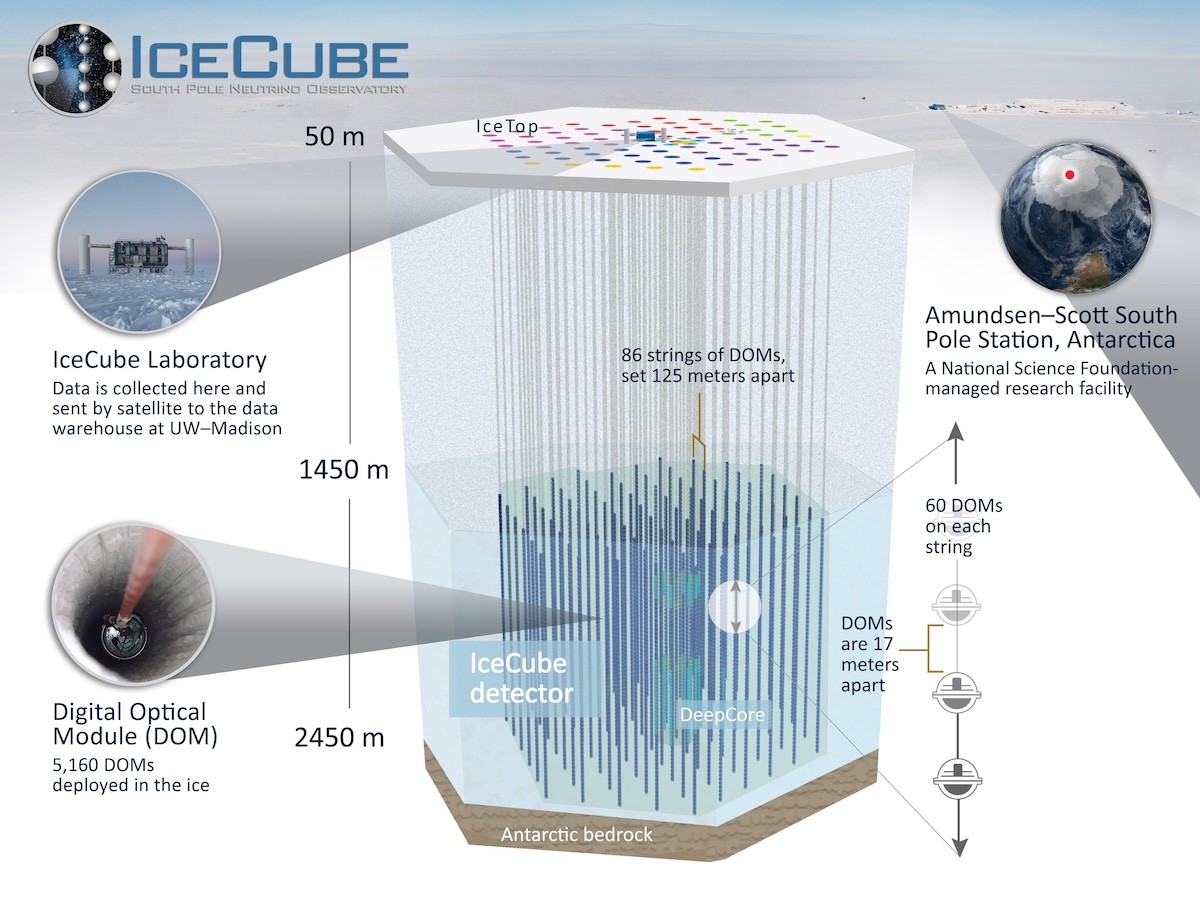
Halzen heads creation of IceCube at the South Pole. The observatory uses a cubic kilometer of Antarctic ice equipped with light sensors to detect neutrinos. These particles carry information about violent high-energy processes in space.
His vision and scientific leadership were fundamental to the IceCube Neutrino Observatory.
Royal Swedish Academy of Sciences
Francis Halzen led an international team of researchers and engineers who gave us a fantastic tool. His tenacity and scientific vision paved the way for a new kind of astronomy.
Professor Mark Pearce, Chairman of the Nobel Physics Committee
Halzen first presented the idea of detecting neutrinos at the South Pole in 1988. At the press conference, the scientist admitted that he was surprised how well the idea worked.
I must say how lucky I am. When we started this work, everyone realized that the idea might be good, but very few believed that it would work, including myself.
Neutrinos remain extremely elusive subatomic particles. The sun produces them in huge quantities, and every second billions of neutrinos pass harmlessly through an area the size of a fingernail. IceCube is looking for neutrinos of much higher energies, born as a result of violent processes far beyond the Solar System, in distant galaxies.
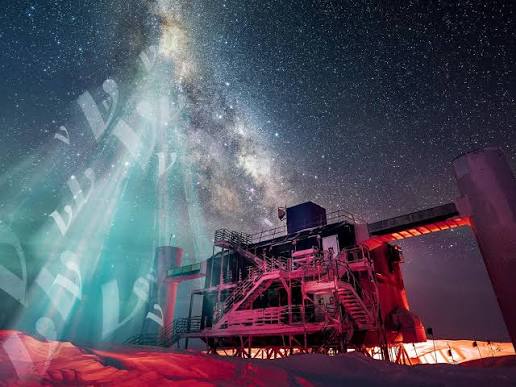
The installation consists of thousands of sensors on long cables, which are lowered into drilled holes and frozen into a block of ice with a volume of one cubic kilometer. Neutrinos can be considered astronomical messengers, indicating fundamental events in the Universe.
Most neutrinos pass through ice without consequences. Occasionally, a particle still interacts with an atomic nucleus, and fast charged particles appear. They move through the ice and emit a blue glow that is picked up by sensitive light detectors.
Based on the pattern and timing of the flare, scientists estimate the direction from which the neutrino came and trace its origin in space. Such collisions are so rare that the observatory required a huge volume of transparent ice. Halzen proposed using Antarctica’s vast natural ice sheet, and so began an audacious plan to build a neutrino observatory at the geographic South Pole, with thousands of light sensors embedded deep in the ice.
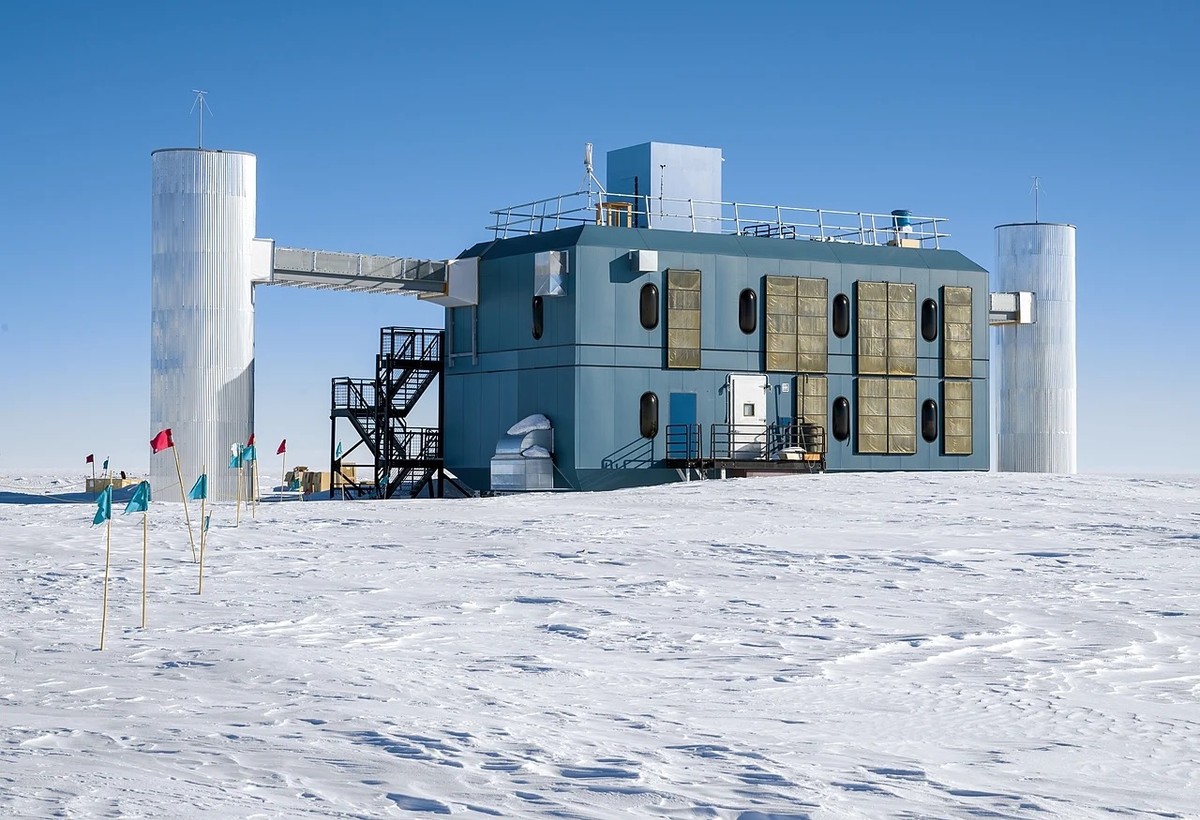
The signals make it possible to study places that conventional telescopes have difficulty seeing. As a result, it was even possible to obtain a blurry image of the Milky Way, composed of neutrinos.
Francis Halzen for his work and worldwide recognition will receive million dollars.


