


An enthusiast named FamBoy32-dev has released LiveHaptics, an application that transfers PC system audio to the recoil motors of the Steam Controller. The idea is to allow hearing-impaired users to experience music, movies and games through the vibration of the gamepad. The mod is already available on GitHub and runs on Windows and Linux.
Technically, LiveHaptics runs the system audio stream through a DSP chain on each channel separately, and then generates a haptic PCM stream that is sent directly to the controller actuators. This approach allows you to maintain the separation into left and right channels and convey the dynamics of the sound, and not just amplitude noise.
The application supports all methods of connecting a gamepad:
-
Bluetooth
-
wired connection via USB
-
Valve proprietary wireless receiver
The Windows version is a completely static executable file that does not require installation. The Linux port is compatible with any distribution, including SteamOS. An early demo on Reddit shows how the controller’s vibration plays the sound of a YouTube video and a game scene.
Getting started on Windows looks easy. You need to close Steam, unpack the archive from the releases page on GitHub and run the executable file, then connect the Steam Controller and select the desired source in the “Capture device” field, if it is not assigned by default. Detailed instructions for Linux are included in a separate repository document.
The mod is able to complement existing solutions for hearing-impaired players, such as subtitles with advanced font settings, background and sound direction indication, which are increasingly found in new games. Haptic feedback provides something that text cues don’t, namely a sense of rhythm, explosions, and spatial dynamics.
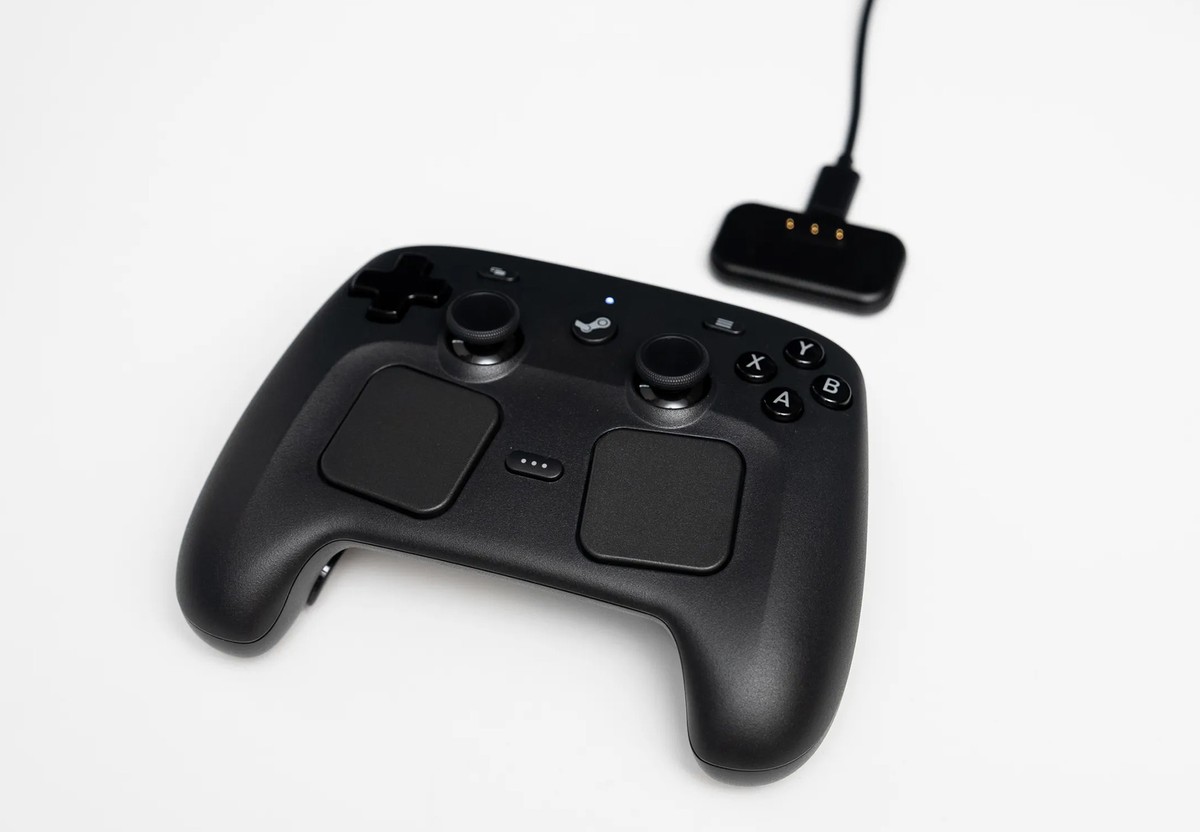
The $99 price tag makes the Steam Controller an expensive option compared to regular gamepads, but the openness of the Valve platform has given rise to a noticeable number of amateur developments since its April release.
Previously, enthusiasts taught the controller to move across a surface using vibration, and then combined this trick with a computer vision system so that the gamepad itself found its way to the charging stand.
SteamHapticsPlayer works in a similar way, which can play audio files through the controller motors on Windows and Linux. The same developer has also released a separate utility for accurately monitoring the gamepad’s battery charge.
Officially, the Valve controller requires the Steam client to be running in the background, but modders have compiled firmware for microcontrollers that removes this limitation. With the Pro Micro nRF52840 board or similar, the gamepad works with Nintendo Switch, Xbox, PlayStation 5, PlayStation 4 and even PlayStation 3.
Steam Controller turned into a radio-controlled car via a browser
The Steam Controller itself is positioned by Valve primarily as the main control method for the hybrid PC and Steam Machine console, although it is also designed for regular PC gaming. The release of the Steam Frame VR headset is expected in the near future.


