


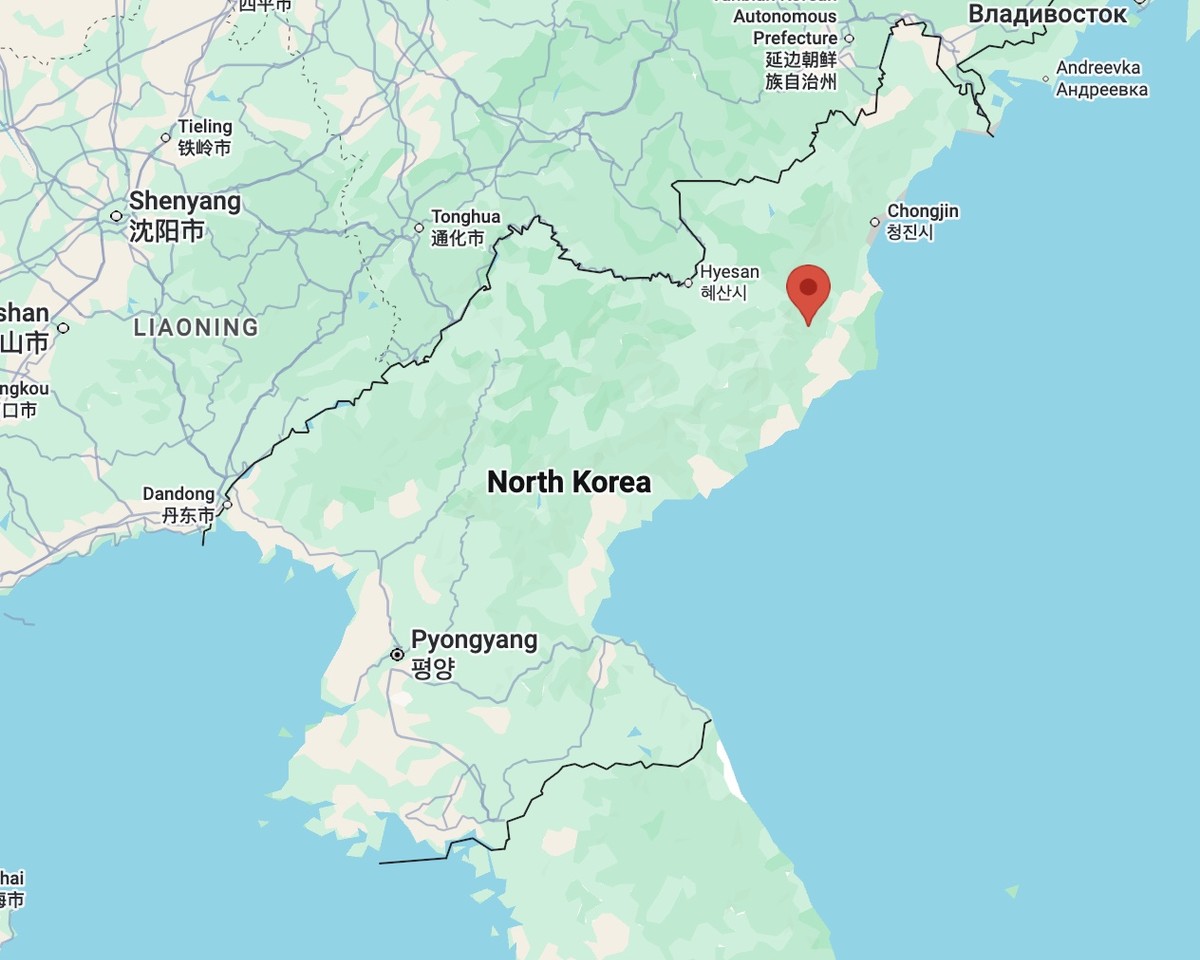
North Korea has conducted at least six major underground nuclear tests at the closed Punggye-ri test site under Mount Mantapsan in North Hamgyong Province.
The latest explosion, on September 3, 2017, was recorded by the US Geological Survey (USGS) as a seismic event of magnitude 6.3. However, the tremors in this area, as it turned out, have not subsided yet.
Researchers from three Chinese universities in collaboration with the China Earthquake Administration (CEA) tracked the resumption of seismic activity on several previously quiet faults around Mantapsan.
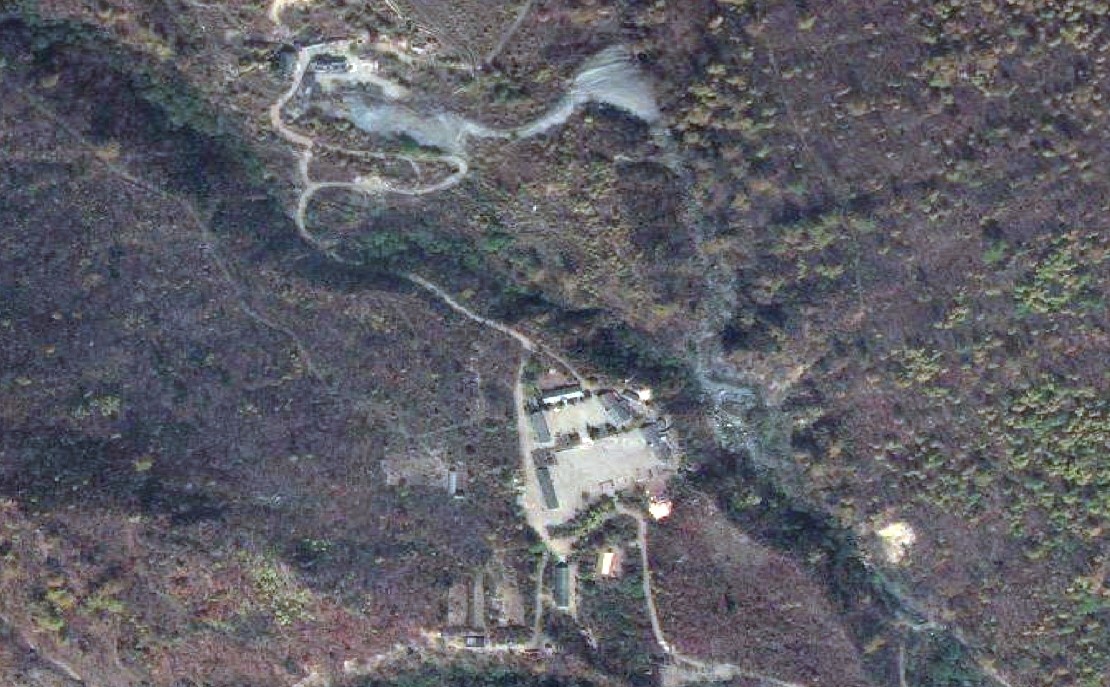
The first such event occurred on September 23, 2017, three weeks after the final test, and tremors continued periodically until May 2025, the last month of data collection for the work.
The consistent increase in both the frequency of earthquakes and the rate of seismic torque release indicates that the crust did not simply relax to a state of equilibrium after the last explosion.
The power of the nuclear charge tested in September 2017 is estimated at 100–250 kilotons of TNT. This is at least ten times more powerful than the bomb dropped by the United States on Hiroshima at the end of World War II.
The paper’s lead author, geophysicist Xingli Fan of the Key Laboratory of Earth Exploration Methods and Information Technology at Chengdu University of Technology, and colleagues collected data from seismic sensors in China and South Korea. Some of the stations were located quite close to the secret facility, at a distance of 80 to 200 kilometers.
The data set covered the period from 2008 to 2025 and identified 1,399 local seismic events. Such a surge has not been seen in the region since formal cataloging of earthquakes on the Korean Peninsula began in 1904.
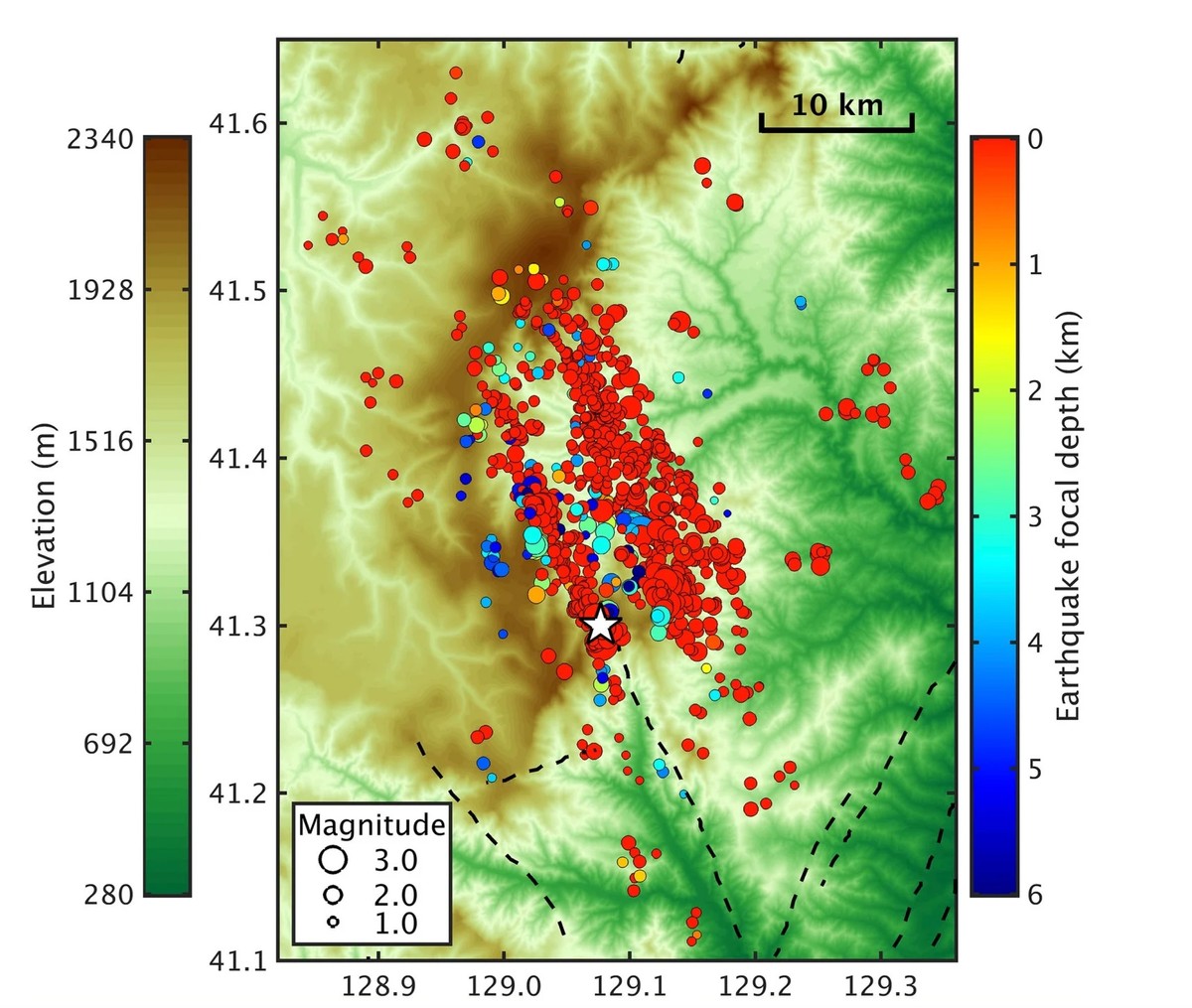
For researchers, an important starting point was the date of the first major underground test at Mantapsan, October 9, 2006. It was from this moment, according to their estimates, that the explosions began to change the local tectonic situation around the mountain.
Another indication was provided by satellite radar observations that recorded “significant ground deformation” at the top of Mantapsan.
Instead of generating only short-lived sequences of aftershocks, such disturbances are capable of triggering delayed reactivation of intraplate faults that unfolds over the course of years.
The connection between underground nuclear explosions and seismicity has been known since the beginning of the Cold War, but what is happening in northeast North Korea is quantitatively different from previous cases. Aftershocks have been documented at both the Nevada Test Site in the United States and the Semipalatinsk Test Site in Kazakhstan.
At the same time, the tremors there were limited to days and weeks after each explosion, concentrated in the immediate vicinity of the epicenter and quite quickly returned to background values. The growing activity in Mantapsan seems an anomaly for tests of this kind.

Japanese scientists have suggested a connection between solar flares and earthquakes

Scientists have learned to find fault areas where strong earthquakes will occur
The consequences concern not only the seismic safety of the region, but also the monitoring system under the Comprehensive Nuclear Test Ban Treaty. Distinguishing a natural tectonic shock from an explosive event becomes more difficult.
Seismicity occurring years after detonation can complicate attribution and blur the distinction between explosion-related events and tectonic events.
Therefore, continuous monitoring and physically based interpretation are necessary when assessing late seismic activity near legacy test sites.
The long-term effects cannot yet be determined.


