


The global PC market finds itself in an unusual situation: fewer computers are being sold, but manufacturers’ revenue is growing. The reason is a shortage of memory and a deliberate shift in production towards expensive machines with support for local AI computing.
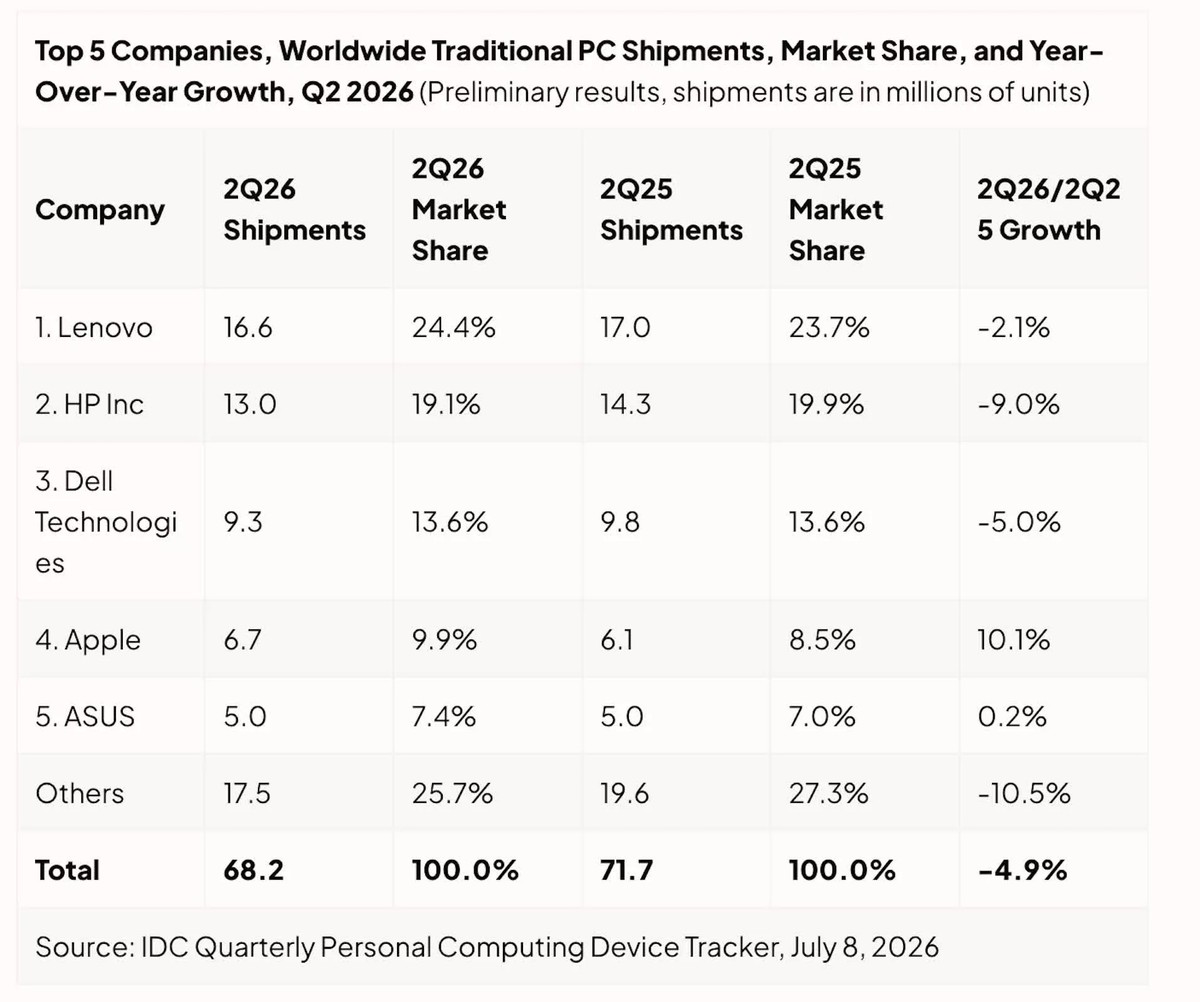
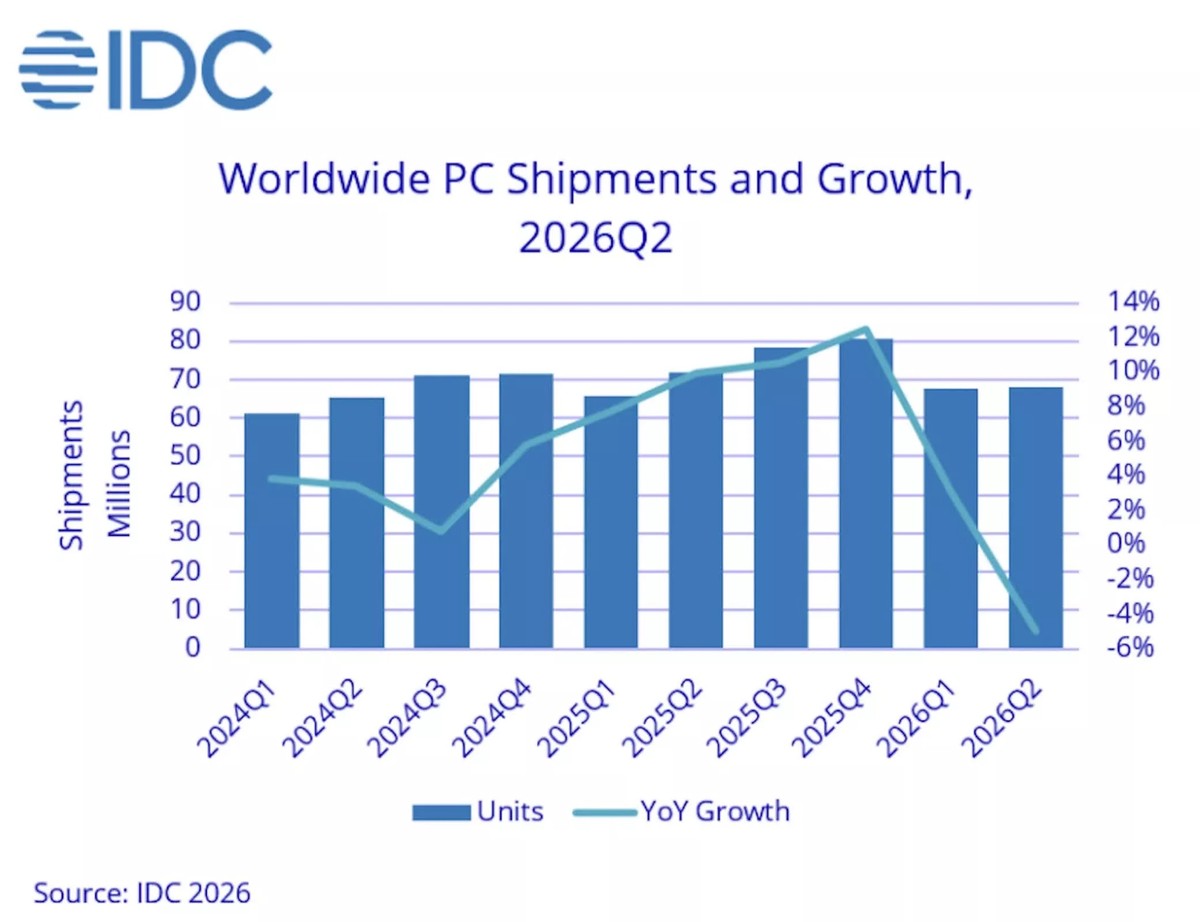
According to International Data Corporation, global PC shipments fell 4.9% in the second quarter. At the same time, analysts expect that average prices for computers will rise by 20% this year, followed by a more modest rise in prices in 2027, although unit shipments will continue to decline.
The root of the problem lies in the AI infrastructure segment. The demand for memory chips from data centers has inflated the cost of components and limited their availability for other categories of hardware.
Manufacturers reacted predictably – they focused production on more expensive models, especially on systems capable of processing AI tasks directly on the gadget itself. At the same time, supply volumes are falling, but revenue is growing.
Jitesh Ubrani, Director of Consumer Research IDC (The Wall Street Journal) said:
They have to compensate for decreased supply with higher prices to maintain or increase revenue.
Quarterly reports already reflect this strategy. HP said revenue in its personal systems division, which includes its PC business, rose 18% in the second quarter, while unit sales fell 16%. At Dell, the client solutions business added 20% of revenue in the last quarter, and Lenovo reported growth of almost 30% in the PC and smart devices segment.
At the same time, vendors are abandoning entry-level machines. Memory is expensive and in short supply, so components are going into premium configurations, where the high price better absorbs price increases and protects margins.
AI-PCs play a central role here. This term typically refers to systems that can perform some AI computing locally, rather than relying entirely on the cloud. Such machines combine new processors, graphics or separate neuroprocessor units with increased memory, which increases both the requirements for components and the retail price.
It is these opportunities that manufacturers present as justification for price increases. HP CFO Karen Parkhill told analysts that the share of AI-PCs in shipments has increased and will continue to increase.
Karen Parkhill, HP CFO:
We are proud that today the share of AI-PC in our supplies has increased. This segment will continue to grow in the future.
Corporate customers can become the main support of the market. UBS analyst David Vogt noted that business demand accounts for about 75% of the PC market volume and should prove relatively resilient, especially as enterprises evaluate on-premises AI systems for sensitive or complex workloads. This is especially true in regulated industries where organizations want greater control over data and AI processing.
The market still has limitations. PCs compete for corporate IT budgets with servers, networking equipment and cloud services. Vogt added that some of the recent commercial demand may represent orders pushed forward in anticipation of higher prices, rather than a sustained increase in purchases.
It will be more difficult to retain the consumer segment. Private buyers are unlikely to be willing to pay a significant premium for AI functions if the practical benefits are not obvious and software support remains uneven. The analyst considers HP’s forecast for the current quarter, which turned out to be below the seasonal norm, to be a sign of this.
David Vogt, UBS analyst:
This is a challenge that HP, Dell and Lenovo will have to contend with.
You should not expect quick relief from memory. Ubrani does not expect the supply situation to improve before 2028. IDC forecasts indicate that prices may begin to decline after that, but they will not return to 2025 levels.
So far, the recovery of the PC industry is not based on an increase in the number of computers sold, but on a more profitable assortment. The model helps vendors show strong revenue when volumes are falling, but it leaves buyers in a market where waiting for a cheap laptop in the near term yields little or nothing.


