


For more than ten years, Steam sales have accustomed players to a simple reflex: when you see a red price tag, you click “buy,” and you’ll play sometime later. Over time, everything turned upside down, and now an achievement is considered not to be a game snatched for pennies, but to an empty basket.
Missing two seasonal marathons of discounts in a row is almost asceticism, which should be celebrated with a separate achievement.
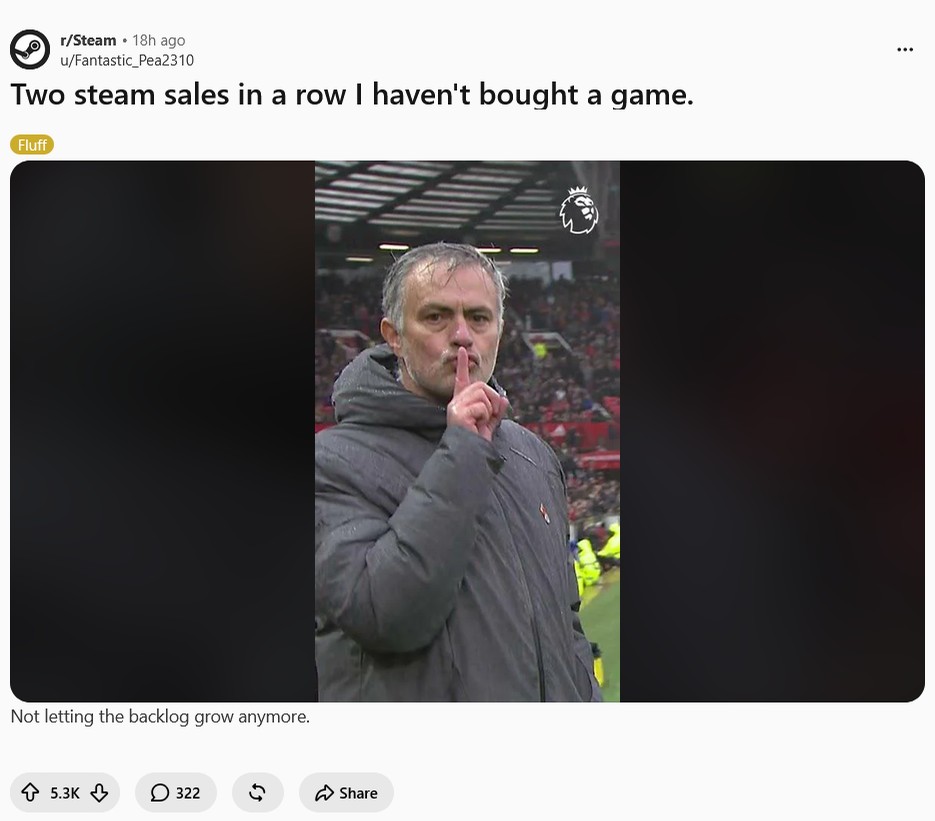
This is exactly what boasted one of the Reddit users after Valve’s fall sale, which ended on October 8. He explained everything simply – he doesn’t want to inflate the backlog anymore. There were many who wanted to share his pride, but for many, the motivation turned out to be much more prosaic. One said directly:
You don’t buy because you have a strong will. I don’t buy because my account is empty. We are not the same.
There is also a more modest version: sales have simply become worse. Previously, a game that was two or three years old was easily given 75–90%, entire publisher catalogs were sold for a couple of dollars, and flash discounts, which Valve abandoned back in the mid-2010s, turned every day of sales into a hunt.
Now a six-year-old title can easily be 30-50% off, and someone broke down and wrote that the current format boils down to “this $70 game from three years ago is now $50, what a bargain!”

Players bombard Gears of War: E-Day with negative reviews on Steam over strong black women
There is a compelling counter-argument to this theory. Steam veterans have long collected almost everything worthwhile that has ever been sold at a 90% discount, and against the background of such a collection, new offers inevitably look pale.
Someone even turned purchases into accounting with strict rules. One player saves £100 for each sale, but spends it only after internally “judging” each purchase. Since 2020, just seven games have made their way into his collection, from Civilization 6 to Baldur’s Gate 3, for a total of £101.06.
Others limit their wish list to fifty items, take only with a discount of 50% or more, or check the price history and silently remove the game from the cart if the price tag is not a historical minimum.


