


SpaceX conducted the 14th flight of the Starship spacecraft and put it into low Earth orbit for the first time. The launch on the Super Heavy launch vehicle took place early on Monday morning. The flight was not without glitches, but the main task was completed.
While still at the launch site, Starship lost one of its six Raptor engines. SpaceX decided not to interrupt the flight, and the ship still reached orbit, although the program had to be cut short.
An engine failure significantly changed Flight 14’s flight plan:
-
Initial scenario – six orbits around the Earth in about 10 hours
-
The final scenario is about three hours in orbit, then re-entry and splashdown in the Pacific Ocean
Entering orbit distinguishes this flight from previous ones. Low Earth orbit refers to altitudes up to approximately 2000 km, and for stable flight in it the device must reach its first escape velocity of about 7.8 km/s. Previous Starship launches followed a suborbital trajectory, in which the ship rises into space but does not complete a full orbit around the planet.
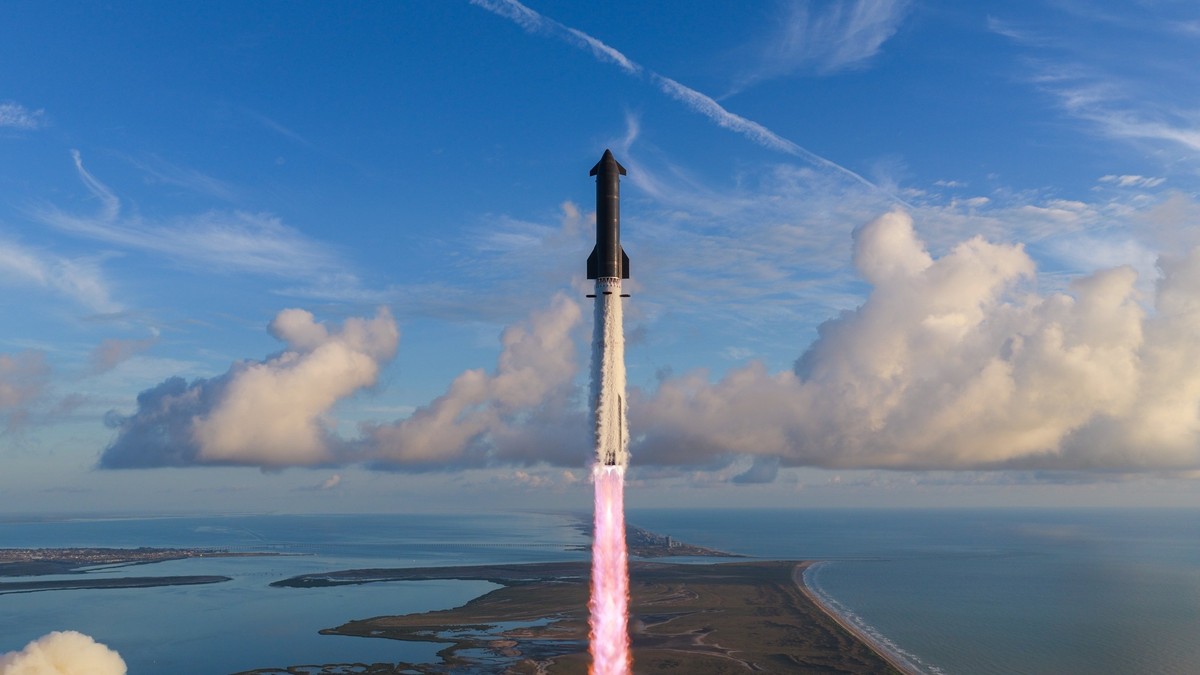
During the flight, Starship launched 26 new generation Starlink V3 satellites into orbit. According to SpaceX, the Starlink team has already established communication with all 26 devices. New satellites should increase Internet speed for service subscribers.
V3 satellites have flown on Starship before, including on its 13th flight. However, then they remained in suborbital space, and the launches themselves served as a test of whether new devices could connect to the existing Starlink constellation. Now the satellites operate in real orbit.
https://www.youtube.com/watch?v=mSQnhKKmC1s
At the same time, SpaceX was testing the reusability of the Super Heavy booster. After the Starship accelerated and the stages separated, the booster landed in the Gulf of Mexico, from where it will be picked up and delivered to the base.
This time Super Heavy was not caught by the mechanical grips of the launch tower, which were nicknamed “sticks”. SpaceX had already demonstrated this method of return after the fifth flight of Starship, but in the 14th mission it was abandoned in favor of landing on water.


