


Seeing the Milky Way with the naked eye is becoming more and more difficult every year. Artificial city lighting and the growing number of satellites in orbit are brightening the night sky so quickly that for most people, true darkness is no longer a rarity.
The scale of the problem is shown by a study published in Science magazine. According to his data, between 2011 and 2022, the brightness of the night sky grew by an average of 9.6% annually. At this rate, the sky becomes twice as bright approximately every eight years.
The results are based on observations of volunteers who used the naked eye to estimate how many stars were visible above their place of residence. This method turned out to be more sensitive than satellite measurements.
Orbital sensors poorly record the blue part of the spectrum, characteristic of modern LED lamps, and because of this they underestimate the real increase in illumination.
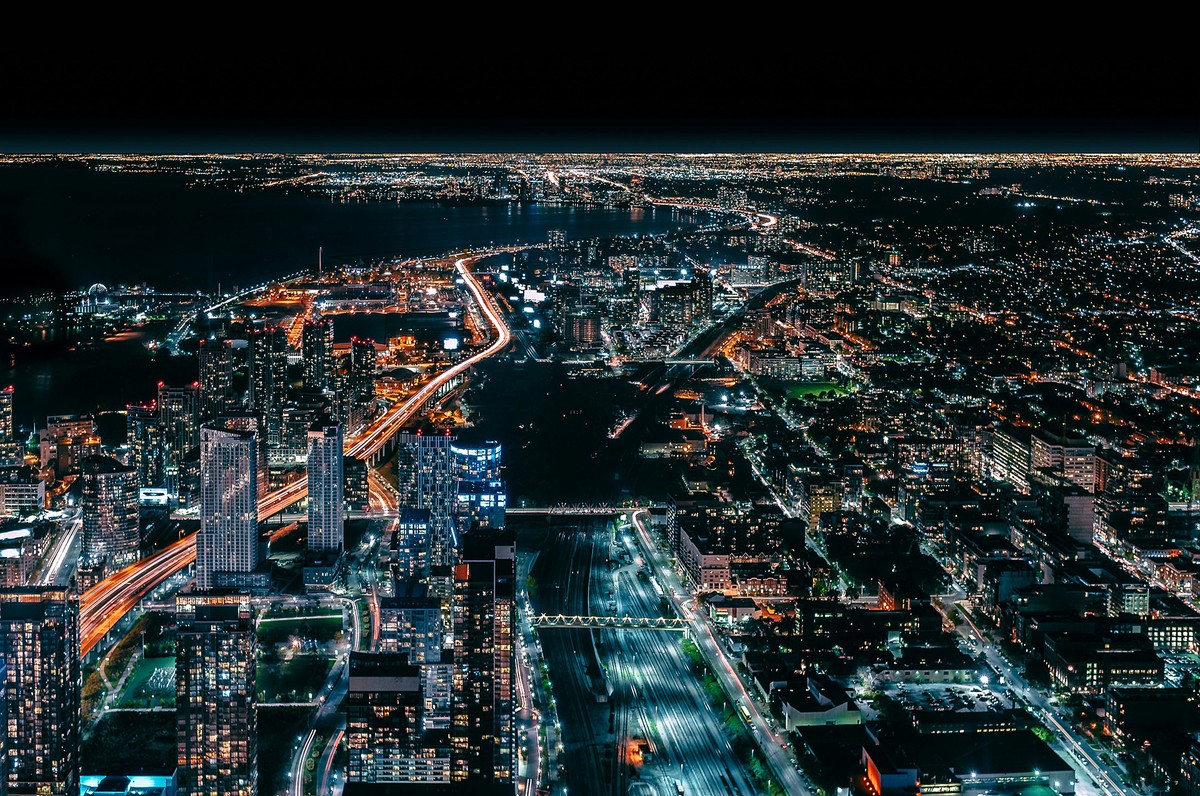
The massive transition to LED lighting played a significant role in the growth of light pollution. LED lamps are cheaper and more efficient than old sodium lamps, but these savings often result in streets, parking lots and facades being illuminated even brighter and longer. In addition, cool white light with a high proportion of blue is more scattered in the atmosphere and creates a denser light “cloud” over cities.
At the same time, satellites make the situation worse in orbit. Astronomers have long complained that thousands of devices in low Earth orbit leave bright marks on telescope images and interfere with observations. In addition, ideas are emerging for satellites that should specifically reflect sunlight to Earth at night. The American Federal Communications Commission (FCC) has already approved the launch of such a mirror device.
As the journalist notes The Guardian Tove Danovich, access to the dark sky is important not only for astronomy enthusiasts. The illumination confuses nocturnal animals that navigate by moonlight. Constant exposure to brightly lit environments disrupts the circadian rhythms of almost all living things, including humans.

A photon with an energy of 300 TeV has traveled 2 billion light years – to explain this, physicists violated Einstein’s rules

The space shark won the astrophoto of the year competition – 4000 images and 8 categories
Some cities are already trying to limit lighting. A pioneer in this area was Flagstaff, Arizona, where the Lowell Observatory is located, and the city itself received the status of the world’s first “Dark Sky City” in 2001. Local regulations regulate several night lighting parameters:
-
permissible amount of light
-
type of lamps used
-
directions and places where light can legally fall
The possibility of introducing similar restrictions is now being considered by the authorities of the State of New York. However, as Danovich notes, such laws have no effect on illumination from space.
Satellites and orbital reflectors remain outside the jurisdiction of city and regional regulations, and local authorities have nothing to deal with this source of light.


