


The top US military leadership announced that American troops should prepare for possible combat operations not only in Earth orbit, but also in the lunar region. This was stated by General Dan Cain, chairman of the Joint Chiefs of Staff and chief military adviser to President Donald Trump.
According to Kane, the US military must adapt now to be ready to “fight, endure and win – from the seafloor to the cislunar space.” The formulation covers the so-called cislunar space – the zone between high Earth orbit and the Moon itself, which military analysts increasingly call a potential arena for future conflicts.
The US Space Force was created by Trump in 2019 to operate in both space and cislunar space. Lt. Gen. Gregory Gagnon, head of Combat Forces Command within the Space Force, explained to journalists:
As humanity moves deeper into space, it is the Space Force’s job to be ready to protect U.S. interests.”

Trump showed AI art of a US Space Force uniform that looks similar to the uniform of Imperial officers
Statement sounded days after Air Force Secretary Troy Meink publicly acknowledged for the first time at the same conference that the United States had already deployed “space control weapons” in orbit. A series of similar statements by military officials in recent days runs counter to long-standing international agreements, according to which space should remain an exclusively peaceful space without the deployment of weapons.
Several countries, including the United States, have already demonstrated the ability to shoot down satellites in Earth orbit, but these tests were conducted from the ground and on their own satellites. Gagnon noted that the situation is changing:
The intelligence community has made it clear that potential adversaries are seeking to expand warfare into space.
He also added that “our potential adversaries, such as the PRC, are actively engaged in activities in this system, in various parts of space.” China created its own space force in 2024, tasking it with enhancing crisis management capabilities in space.
Beijing’s reaction was not long in coming. Chinese Foreign Ministry spokesman Guo Jiakun told reporters:
China always advocates the peaceful use of outer space, ensures its security, and opposes weaponization, militarization and the arms race in outer space. I call on the United States to stop expanding military preparations in outer space.
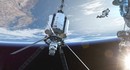
The United States for the first time officially confirmed the presence of military weapons in Earth orbit
It remains unclear whether the placement of weapons in space and possible plans for their use in cislunar space violate international treaties on the non-militarization of space. The 1967 Outer Space Treaty, signed by both the US and China, establishes several key principles:
-
celestial bodies, including the Moon, must be used “exclusively for peaceful purposes”;
-
the placement of nuclear weapons in space is prohibited;
-
countries are responsible for damage caused by their space objects.
Two years ago, the UN attempted to tighten measures against the militarization of space following reports that Russia was developing space-based weapons. Then Russia blocked a joint resolution between the United States and Japan, which called on all countries to abandon the development and deployment in space of nuclear weapons and other types of weapons of mass destruction prohibited by the treaty. A counter Russian resolution on a complete ban on any weapons in space “for all time” was also not adopted.
Gagnon also said the United States plans to double the size of the Space Force over the next five years, bringing it to about 25,000 troops. About two-thirds of this increase will come from Combat Forces Command.
We have certain military capabilities because we are preparing to defend the country. The reason we have these capabilities is to create deterrence.
When reporters asked Gagnon about compliance with the 1967 treaty and other similar obligations, he responded that the US Space Force “will continue to conduct safe and responsible operations in all areas of space.” However, he refused to comment on the position of the Space Force and the US military leadership in general on the use of weapons such as bullets or shells in space, referring the question to the Pentagon.
The department did not respond to a request for comment at the time of publication.


