


Creative Assembly solves a difficult problem – Total War: Warhammer 40,000 should maintain the series’ reputation as a deep tactical strategy game, while also providing an entry point for those who have never played Total War and are unfamiliar with the tabletop world of Warhammer. The studio claims to have accomplished both tasks at once.
At gamescom 2026 edition Eurogamer spoke with Joy Day, the game’s lead tutorial campaign designer and author of the well-received Total War: Warhammer 3 tutorial, as well as Dave Petrie, who is responsible for the combat portion of the upcoming release.
Day says it’s “the biggest and most complex game we’ve ever made.” The reasons are immediately visible – the usual Total War tactics are acquiring a whole set of new systems and mechanics.
https://www.youtube.com/watch?v=fgkryNQ11Qg
At the micro level, battles have become a barrage of fire, with new line-of-sight and cover systems at work. Tactical abilities like aerial bombing and powerful unit reinforcements are called up instantly, and the weapons of a particular unit must be selected for the appropriate target, otherwise there will be no success.
Petrie notes that the need for such an arsenal became “painfully obvious” when the team began to think about how to correctly transfer the Warhammer 40,000 universe into the Total War format. Many of the boldest decisions grew out of the desire to accurately convey the dark sci-fi setting.
Dave Petrie, combat producer of Total War: Warhammer 40,000:
Quite quickly you look at it and say: “There are a lot of weapons here, much more weapons than we are used to seeing in Total War.” Everything has a lot more firepower at range, although there is still plenty of hand-to-hand combat…
We had to rework a lot of things to support the combat we wanted. The systems have been fundamentally changed to handle this volume of fire: we simulate every bullet, every bolt round and every laser beam. So we had to do a lot of things well to pull it off.
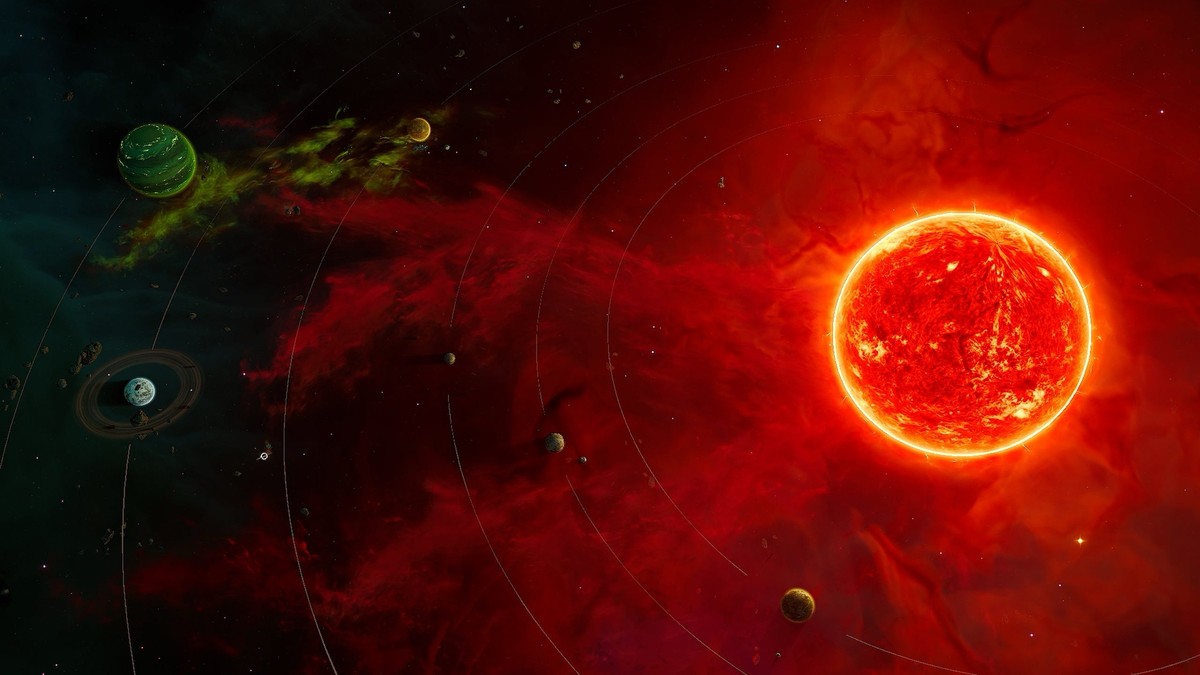
Day also highlighted the new Warcore engine, which was needed to “make the campaign feel as big as it should.” The scale has really grown – events develop not on one planet, but within the galaxy, and several battlefields on different worlds have to be simulated simultaneously.
A separate difficulty arose at a much smaller level – in the expectations of the Warhammer 40,000 community. There are plenty of loyal fans not only among large factions like the Space Marines, but also among individual sub-factions.
Each such subfaction has its own specialization – one order loves motorcycles, the other gravitates towards the “hit and retreat” tactics. The team considered it important to convey the character of each of them.
The solution was the specialization of units, which Petrie calls an innovation for the series. Units can be upgraded and specialized by giving them a choice of weapons, such as bolter rifles or stalker rifles. Sergeants will also receive a certain degree of customization to suit their desired image.
We capture here something that is so intrinsic to this universe and what Warhammer 40,000 is to the fan. The ability to interact with it in your own way, put your own imagination into it and share it – that’s the whole point. Creating your own order or clan is incredibly important. We knew we had to do this.
The question remains about the “most accessible” part. Day says that the studio is expecting a large influx of players who have never played Total War, and therefore has prepared the “friendliest” tutorial in the history of the series.
There’s no denying that Warhammer 40,000 is growing in popularity. It was incredible to watch… and with this game coming out at such a time of popularity, there is a huge chance that we will see a huge wave of new players coming to Total War. We want to make Total War: Warhammer 40,000 as clear and accessible as possible.
But it’s still Total War – we don’t want to fundamentally change what Total War is. We want to invite people into this big tent with a dark setting. So if a lot of new players come, let’s show them why Total War is cool.
To do this, the training uses a gradual disclosure of the interface: individual systems are introduced step by step through a special campaign. There will be two tutorial campaigns in the game, the purpose of which is to make the transition to a full-fledged campaign and other modes less intimidating.
According to Day, both campaigns were planned from the very beginning of development as an extension of the idea of the Total War: Warhammer 3 tutorial. That introductory scenario was well received, but compared to the complexity of the giant Immortal Empires campaign, it remained a fairly simple exercise.
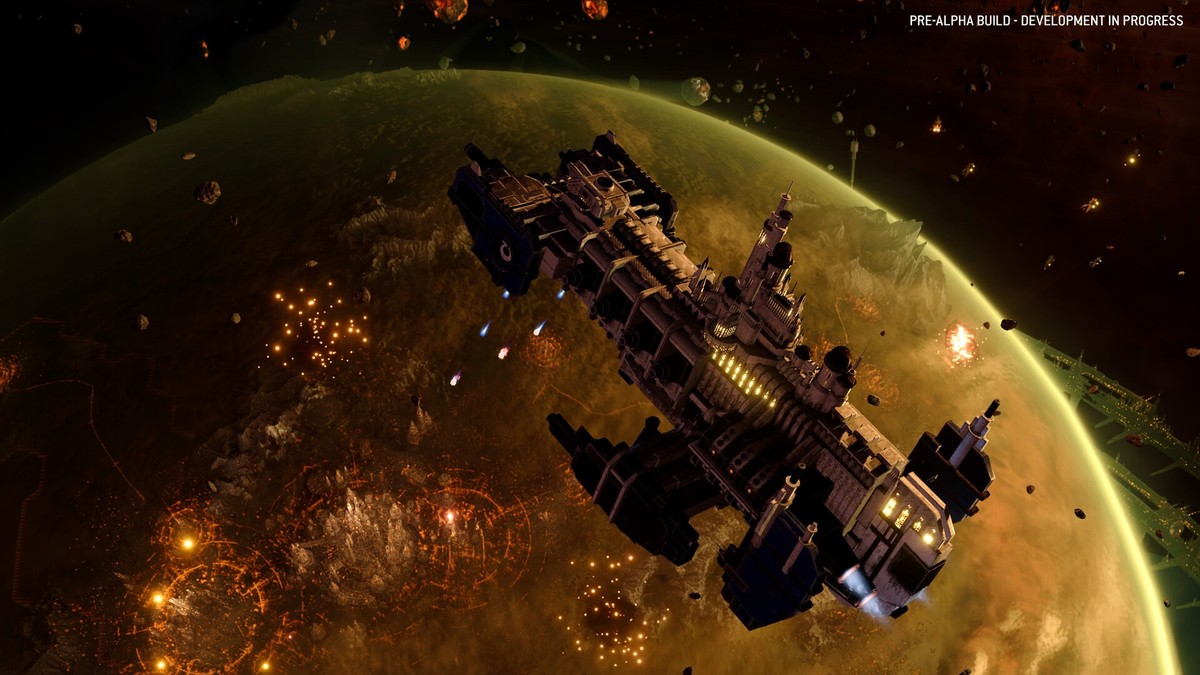
The training also has a second function – getting to know the Warhammer 40,000 universe itself, its setting and dark tone. Stepping into the armor of galactic super-soldiers is still a bigger step than taking on the role of Cao Cao from Total War: Three Kingdoms.
The game’s brand director calls it “the start of a new era” for Creative Assembly, and the team’s enthusiasm is palpable.
This is the start of a new and, frankly, wildly crazy adventure. We’ll approach this launch release the same way we did Total War: Warhammer. We will start relatively modestly and… we will fill the game until someone drags us away with more and more of these things.
With enthusiasm and a new arsenal of tools… This is version 1.0, there will be some rough edges, but we will sincerely do our best to create something fantastic.

Space Marines in Total War Warhammer 40,000 will monitor their reputation and avoid accusations of heresy

The Traitor Guard will stage uprisings in Total War Warhammer 40,000 already at release
Total War: Warhammer 40,000 releases in 2027 on PC and consoles.


