


The debate about whether it is possible to update the graphics of a twenty-year-old game without breaking its recognizability has received a detailed technical response.
On the second day of BlizzCon, the “Evolving a Timeless World” panel took place, where Lead Environment Artist Matt Heyman and Lead Software Engineer Jason Scott broke down how the image was rebuilt World of Warcraft: Forever. We are not talking about a new engine, but about three groups of changes inside the old one – fog, lighting and water.
The developers formulated the visual goal as “Azeroth as you remember it.” The point is to combine the original Vanilla with the version that lives in the player’s head and is shaped by nostalgia. The main principle sounds like a requirement for authenticity, and the studio rejects changes for the sake of changes.
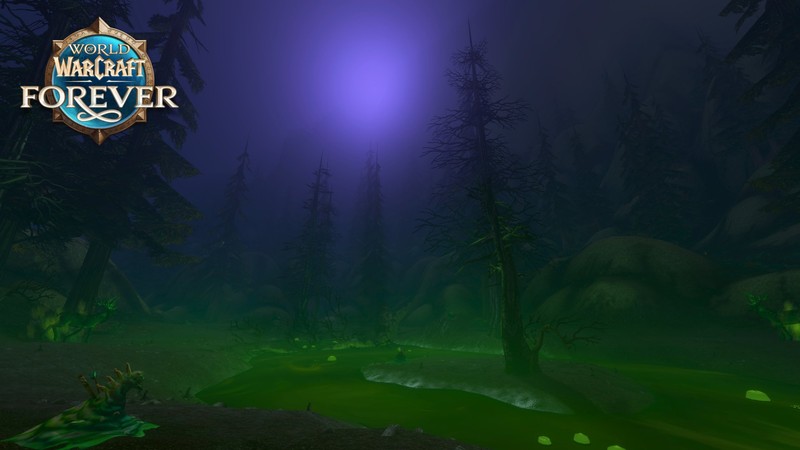
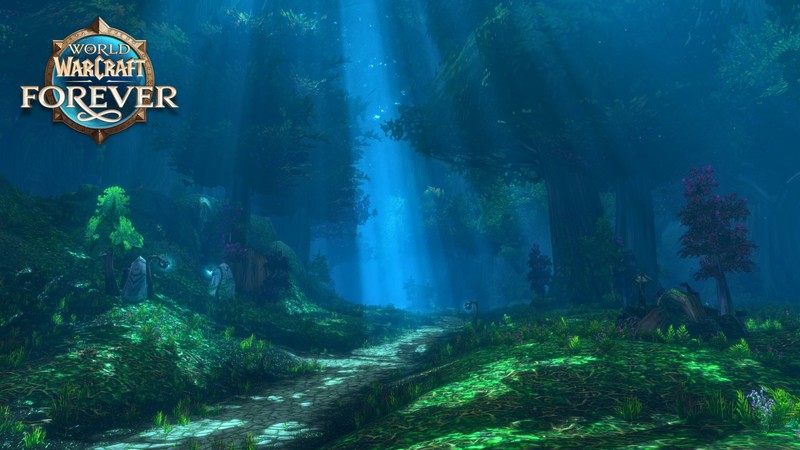
The fog was built into the look of the game from the very beginning and served two purposes at once – it set the mood and hid the drawing border. Now the volumetric fog is responsible only for the atmosphere, and with it a wind has appeared that moves it. A side effect of the technology is real sun rays breaking through the suspension.
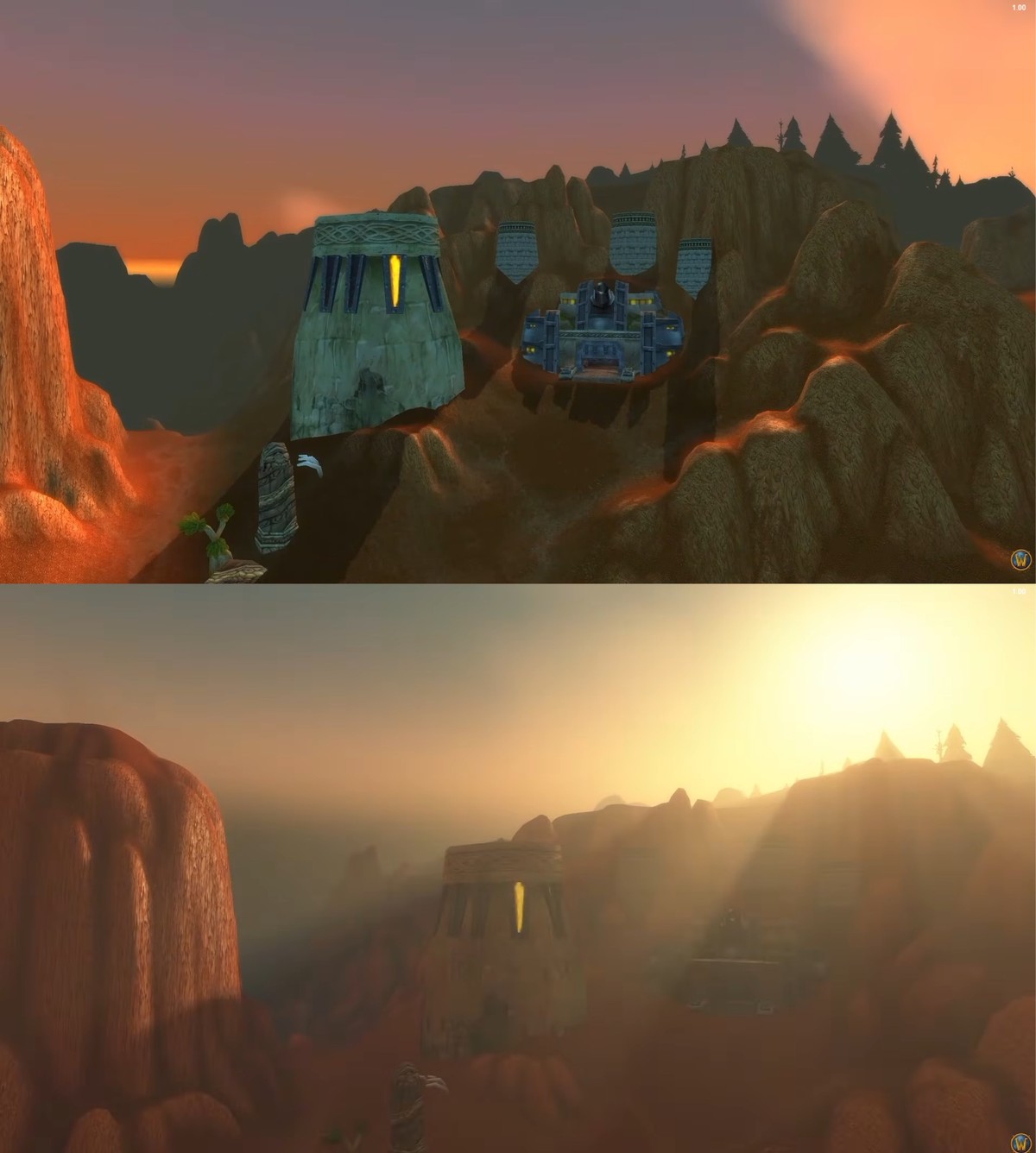
The rendering distance has increased so much that Dun Morogh is now visible from the Wetlands, and if you look towards Alterac, the towers of Dalaran are visible. The fog is voluminous, which means you can walk through it, and it mixes with the surroundings, rather than hanging like a flat veil.
The lighting situation was the worst – in the old client, the mountains did not block the sun or cast shadows, and many models did not react to the position of the light source. In Forever, mountains and objects correctly cast shadows on the landscape and simultaneously generate rays in the fog. In Mulgore, the shadows of the trees used to be static, but now they move with the sun.


Vanilla’s baked ambient lighting has been replaced with global illumination, which reads light much more accurately. For this purpose, the studio has assembled its own ray tracer based on existing ideas and completely new developments, and it works not only on the recommended configuration, but also on the minimum one. The sun and moon have become true directional sources, and the cycle of the day controls their positions in real time.
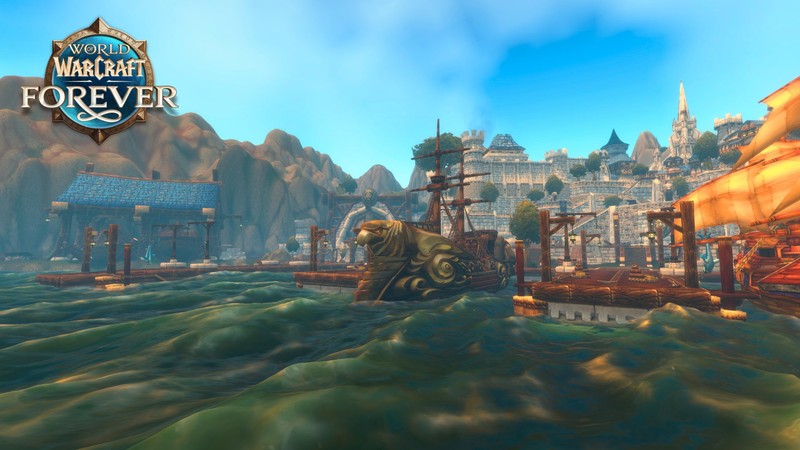
Water received a separate shader, written from scratch. The original water moved in a given direction, but remained flat and static. New parameters allow you to control several characteristics at once:
-
water density and light penetration depth
-
transparency, from crystal clear to cloudy
-
current, waves and reaction to the wind
-
reflections including the sun and moon
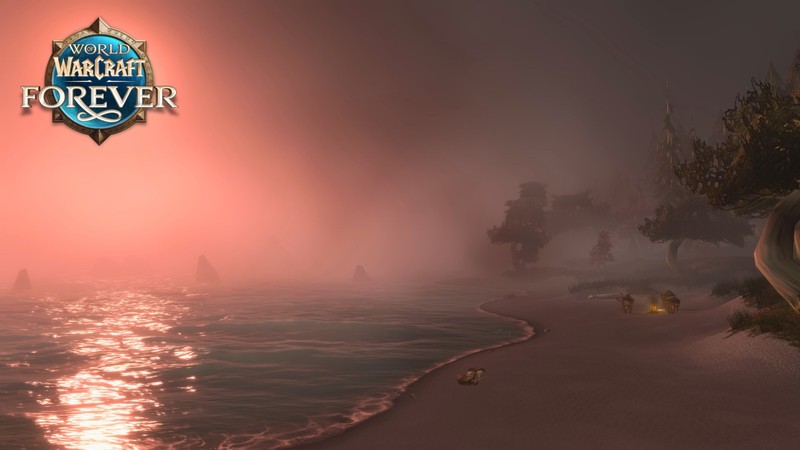
Rivers now actually flow, bend around rocks and produce foam when colliding with obstacles. There were almost no reflections in the water of the original game, which made sunrises and sunsets over water look flat.
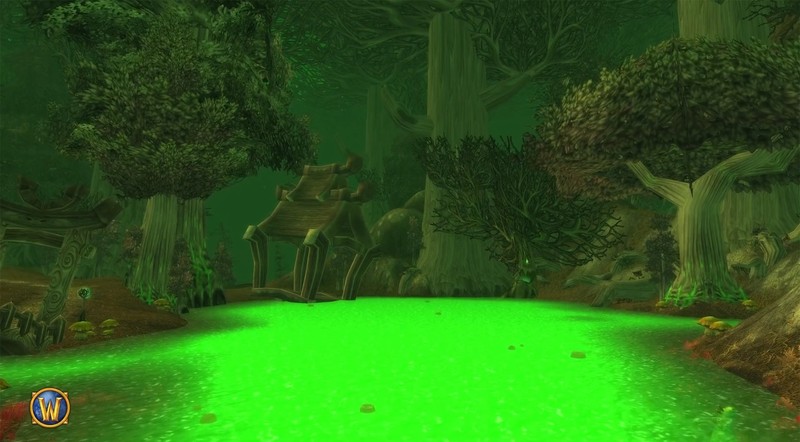
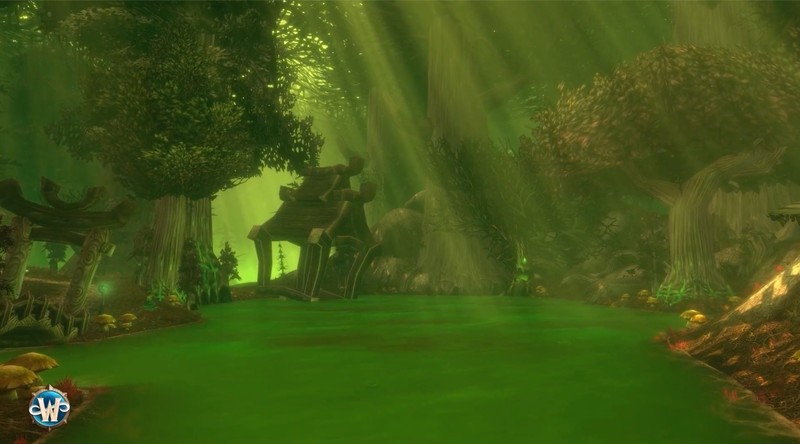
The developers showed the process of reworking the zone using the example of Dark Forest, checking with the original client version 1.12. First, the ambient light is reduced, local sources and global illumination are added, then a base layer of fog is laid down. On top there is a second layer of ground fog for creepiness, after which the effect is deliberately weakened so that the area does not move away from the original feeling.
Separate work was carried out on new assets. The game’s art style has changed a lot over the years and is no longer the same as vanilla, so for Forever the studio is consciously sticking with the old style. For Durotar, for example, it would have been tempting to add blue or green fog, but instead the zone was given an orange, sultry atmosphere.
The community’s reaction was divided. Some players believe that the haze eats up the colors and turns each zone into eternal twilight, and in the demo footage the towers in the background are hard to see behind the sunlight. The biggest concern is the Ash Forest, which is at risk of losing its purple hue.
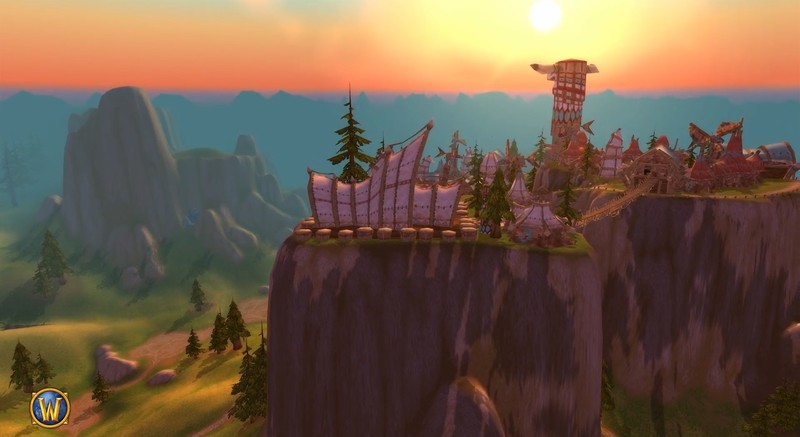
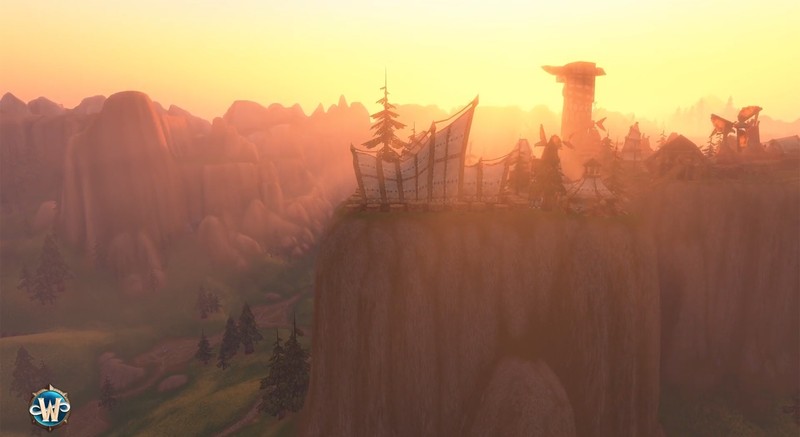
The counterargument comes down to the shooting conditions. The angles for the panel were selected so that the sun would hit the camera directly from behind the mountain peaks, and the developers on the panel specifically stipulated that dawn or sunset would not become a permanent state for each zone. The density of volumetric effects is included in the graphic settings, so it can be reduced or disabled.
The question of transferring the technology to the main version of the game remains open. The developers replied that they would return to this in the future, but now the task is not a priority. The difficulty is that the lighting is adjusted for each zone separately, which means that the entire world of all add-ons would have to be re-lit.
The release is scheduled for November 4, 2026, while Forever does not belong to the same story branch as the modern version.


